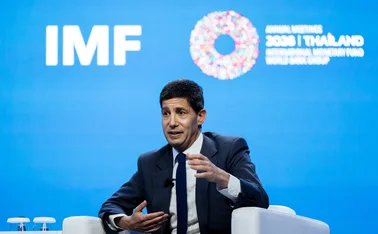
Speech by Tito Mboweni, RB of South Africa, 7 May

SPEECH - In the speech 'Recent Economic Developments' Mboweni said there have recently been encouraging signs that the global slowdown has bottomed out. Business and consumer confidence have strengthened, leading indicators have turned up, industrial production is levelling off, and commodity prices have begun to pick up.

To read past central bank speeches use our Speech Finder. Click the link on the right.

Keynote Address by Mr T. T. Mboweni, Governor of the South African Reserve Bank, at the Founding Congress of the Executive Management Institute of Southern Africa, Johannesburg, 7 May.

RECENT ECONOMIC DEVELOPMENTS

1. INTRODUCTION

Ladies and Gentlemen. I am honoured to address the Founding Congress of the Executive Management Institute of Southern Africa and I thank you for the opportunity. I will first discuss international economic developments, before turning to the domestic economy.

There have recently been encouraging signs that the global slowdown has bottomed out. The IMF also confirmed in the April World Economic Outlook that a global recovery is under way. Business and consumer confidence have strengthened, leading indicators have turned up, industrial production is levelling off, and commodity prices have begun to pick up. The United States is leading the upturn, but there are also signs of recovery in Europe and some countries in Asia. The recent global slowdown has drawn attention to the synchronisation of business cycles in nearly all regions. According to the Fund, the downturn has been the most synchronised in two decades. The IMF ascribes this synchronicity to common shocks such as the higher oil prices, the bursting of the information technology bubble and the tightening of monetary policies from mid-1999 to end-2000. Increased financial and corporate international linkages have also played a role. This, however, raises the question of whether the recoveries in different regions will be as synchronised as the downturn.

The IMF forecasts projected global growth of 2,8 per cent in 2002, somewhat higher than expected in December 2001. The WTO projects that global merchandise trade will increase by 1 per cent this year following a 4 per cent decline in 2001. However, growth in the United States - and countries with close economic links to the United States - has been revised significantly upward, as the pace of recovery has exceeded expectations. The full impact of the pickup will only be felt in 2003 when global growth is expected to rise to 4,0 per cent. The Organisation for Economic Co-operation and Development (OECD) also recently projected that economic growth among its member states would be significantly higher this year than in 2001. OECD GDP growth is expected to accelerate gradually from 1,0 per cent in 2001 to 1,8 per cent and 3,0 per cent in 2002 and 2003 respectively.

2. OIL PRICES

After surging to $32 per barrel at the end of 2000, crude oil prices weakened in 2001 with the slowdown in the world economy. The price of Brent crude reached a six-month high of $27 per barrel in early April 2002 as a result of the tension in the Middle East, the economic recovery in the United States, Iraq's 30-day sales embargo and a disruption in oil supplies caused by a strike at Venezuela's state oil company. However, with Saudi Arabia pledging to replace Iraqi exports and the ousting of the Venezuelan president fuelling expectations of a less stringent oil policy, the price dropped to $23 per barrel in the middle of April. With the return of President Chavez to power the oil price once again increased to levels above $27 per barrel. Crude oil prices, however, recently fell more than 1 per cent after Israeli forces pulled out of the Palestinian leader's headquarters, easing concern that the conflict may escalate and disrupt Middle East oil flows.

3. PROSPECTS FOR THE US

Among the industrialised countries, the upturn is expected to be the strongest in the United States. This upswing is driven by a sharp turnaround in the inventory cycle, as well as substantial reductions in interest rates and tax cuts over the past year. In the first quarter of 2002 the United States economy grew at a seasonally adjusted and annualised rate of 5,8 per cent, following an increase of 1,7 per cent in the previous quarter and a contraction of 1,3 per cent in the third quarter of 2001. This is the strongest pace in more than two years underpinned by increases in consumer spending and the yearlong trend of sharp cutbacks in business inventories is showing signs of tapering off. The acceleration in real GDP growth in the first quarter of 2002 primarily reflected upturns in private inventory investment, exports and residential fixed investment. A gradual strengthening in business investment is expected to underpin the recovery in the second half of 2002 and into 2003.

4. EURO AREA AND THE UNITED KINGDOM

The euro area economy had contracted at a seasonally adjusted and annualised rate of 0,7 per cent in the last quarter of 2001, but a gradual recovery is in progress with depleted inventories being rebuilt and international trade picking up. Growth in the euro area in 2002 is projected to be lower than in 2001, but the economy is expected to gain momentum in the second half of this year, and reaching 2,9 per cent in 2003.

Inflation in the euro area is currently somewhat higher than expected as a result of the higher oil prices. The ECB warned that if the increase in oil prices is sustained, it would also have an impact on inflation rates during the rest of 2002.

In the United Kingdom, for 2001 as a whole, real GDP growth averaged 2,2 per cent, the highest among the G-7 countries. The United Kingdom could, however, not avoid the global slowdown, which caused quarter-on-quarter growth in 2001 to decelerate registering zero growth in the fourth quarter of 2001. The economy, however, managed to recover marginally in the first quarter of 2002 with preliminary estimates showing that GDP increased by a seasonally adjusted and annualised rate of 0,3 per cent.

Given the United Kingdom's significant exposure to economic and financial developments in the United States, improvements in the US economy are expected to positively impact on economic prospects in the United Kingdom. This will support continuing growth in domestic demand resulting from the more expansionary monetary policy since the beginning of 2001 and a fiscal stimulus, largely in the form of planned rises in general government spending. Growth for 2002 is expected to average 2 per cent.

5. JAPAN

Japan continues to experience recession - the most severe of the past decade. However, the increasing economic activity in the United States and Asian economies has led to an increase in Japanese exports. This increase in exports, which accounts for about 10 per cent of the economy, recently prompted the Bank of Japan to raise its assessment of the economy for the second straight month - the first back-to-back upgrade in 19 months. The Japanese central bank stated in its April monthly report that the Japanese economy still continues to deteriorate as a whole, but concluded that the pace has moderated somewhat.

6. EMERGING ECONOMIES

Recent economic attention on Latin America has focused on the crisis in Argentina and its implications for the rest of the region. Argentina's financial markets came under increasing pressure in 2001 because of the growing fear of a debt default and the end of the peso's peg to the dollar. A 66 per cent decline in the peso since the government abandoned a decade-old peg to the dollar in early January has triggered steep price increases. In March, inflation was 4 per cent (month-on-month), the highest in 11 years. Despite months of talks on an IMF sponsored recovery package, both the Argentinean government and the IMF remain divided on a number of issues.

Contagion from Argentina to neighbouring countries has been limited, with the exception of Uruguay. With the exception of Argentina and Uruguay, Latin America should experience better growth as a result of the economic recovery in the United States and Europe.

Economic growth in most developing Asian countries slowed significantly during the year as external demand deteriorated in 2001. However, despite being affected by weak external markets, some countries such as the People's Republic of China, India and Vietnam maintained relatively robust growth. In contrast, South Asian growth accelerated as slowing export expansion was offset by improvement in the performance of the agricultural sector. In Central Asia, growth was higher in 2001, in part because of large investments mainly in the energy sector.

It seems that strong consumer spending in some of the Asian economies is providing some cushion against external shocks. In countries like South Korea, the Philippines, Thailand and Malaysia where interest rates were aggressively reduced in 2001, overall consumer spending rose much faster as exports fell. On the contrary, Hong Kong, Singapore and Taiwan (economies most hit by the global slowdown) saw consumer spending falling during the same period due to their reluctance in cutting interest rates.

The Asian Development Bank, however, expects economic activity to recover in the second half of this year, following the revival of exports in the United States and a stabilisation of domestic sentiment. GDP in developing Asia is projected by the IMF to grow by 5,9 per cent in 2002, but as global economic growth gathers momentum; the economy is forecast to strengthened by 6,4 per cent in 2003.

7. DOMESTIC ECONOMIC DEVELOPMENTS

Turning now to domestic economic conditions, recent events have been interesting to say the least. Against the extreme volatility in the financial markets, and in particular in the foreign exchange market, real-sector developments have been relatively stable.

Growth in the real gross domestic product in 2001 as a whole amounted to 2,2 per cent, marginally exceeding population growth and signifying a small per capita increase. Focusing more closely on the second half of the year, the seasonally adjusted and annualised growth rate in real gross domestic product accelerated from 1 per cent in the third quarter of 2001 to 2 ½ per cent in the fourth quarter. This can be attributed to robust growth registered in the real value added by the non-primary sectors of the economy. While agricultural and mining output volumes contracted in the final quarter of last year, the other sectors expanded. Manufacturing in particular did well towards the end of last year, led by production of motor vehicles and parts, chemicals and basic metals. Manufacturing production rose at a strong annualised rate of 5 ½ per cent in the final quarter of 2001. Impressive output growth was also recorded by the transport, storage and communication sector where a third cellular telephone operator started business, by the financial services industry, and by the wholesale and retail trade sectors.

The construction industry also at last seems to be recovering from the setbacks suffered in the late 1990s, and its real value added rose by 4 per cent in 2001 - double positive in that it also adds to the economy's productive capacity. On that score it is notable that in manufacturing, where the utilisation of production capacity is regularly monitored, the utilisation rate stood at 79,4 per cent in the fourth quarter of 2001. This is still more than four percentage points below the peak rate recorded in 1995, indicating sufficient productive capacity to accommodate a further output expansion. Some indications of bottlenecks in the transport sector are, however, worrying. While our capacity to communicate electronically is advancing in leaps and bounds, ordinary transport of people and goods sometimes seems to be a problem. Some of the construction industry's recent pick-up in activity will help to resolve that problem.

Looking at real activity from the expenditure side, the growth in real final consumption expenditure by households accelerated from 2 ½ per cent in the third quarter of 2001 to 3 ½ per cent in the fourth quarter. This was mainly due to increases recorded in real expenditure on durable and semi-durable goods. Pre-emptive buying in anticipation of future price increases supported the level of durable purchases.

The growth in real final consumption expenditure by general government accelerated somewhat from an annualised rate of 2 ½ per cent in the third quarter of 2001 to 3 per cent in the fourth quarter. This was concentrated in real spending on intermediate goods and services such as medicine. Following years of pruning real government outlays, the interest and debt burden of government has been brought down to the point where resources can be redirected towards more and better service delivery.

Real gross fixed capital formation increased at a seasonally adjusted and annualised rate of 5 ½ per cent in the fourth quarter of 2001. The higher tempo of real gross fixed capital formation towards the end of 2001 was fairly widely dispersed, with the manufacturing, finance, mining and community, social and personal services sectors playing prominent roles.

So far, the production and expenditure information for the first quarter of 2002 presents a bit of a mixed bag, with domestic vehicles sales for example down while manufacturing output continues to rise.

Turning to the external sector, the rand's fortunes appear to have turned somewhat and the weighted exchange rate of the rand has recovered by some 13,45 per cent from 31 December 2001 to 7 May 2002.

South Africa's foreign trade balance - our exports minus our imports - was adversely affected by the slowdown in the world economy. Somewhat disappointing trade balance data up to January 2002 were followed by strong trade surpluses in both February and March; the March surplus, seasonally adjusted, stood at a record level. The exchange rate depreciation has boosted South Africa's international competitiveness considerably, and producers are reacting to it. However, it remains essential to avoid the erosion through domestic inflation of this competitive edge.

As a percentage of gross domestic product, the deficit on the current account of the balance of payments shrank from 1,1 per cent in the third quarter of 2001 to 0,3 per cent in the fourth quarter. For 2001 as a whole the deficit amounted to R1,7 billion or 0,2 per cent of gross domestic product.

Import cover, defined as the value of gross international reserves relative to the value of imported goods and services, improved from 20 weeks' worth of goods and services at the end of September 2001 to 24 weeks' worth at the end of December. The Reserve Bank's net open position in foreign currency - the amount to which the Bank is exposed to exchange rate risk - has also fallen to less than US$2 billion at present, against a peak value of more than US$23 billion some four years ago. Accordingly, perceived weaknesses of the past have been removed. A $2 billion open position in a $100 billion GDP economy which exports $30 billion per annum is quite well-contained.

CPIX inflation over twelve months (i.e. year-on-year increases in consumer prices in metropolitan and other urban areas, excluding interest cost of mortgage bonds) initially fell below 6 per cent in the three months to September 2001, but subsequently picked up to 8,0 per cent in the year to March 2002. Headline inflation rose from 4,0 per cent in October 2001 to 6,6 per cent over the same period. The acceleration in both these measures of inflation in the last few months, was a consequence of higher rates of increase in the prices of consumer food products that, in their turn, were associated with the decline in the exchange value of the rand.

Essentially driven by a slowdown in imported inflation at the time, the year-on-year rate of increase in the all-goods production price index slowed down from 10,0 per cent in December 2000 to 7,8 per cent in September 2001. It then accelerated sharply to 14,1 per cent in March 2002 on account of the depreciation in the value of the rand and the related surge in the imported component of the production price index and in the prices of import-competing domestically-produced goods.

To this account of inflation developments must also be added the fact that both the money supply and bank credit extension are rising at double-digit rates. As far as the money supply is concerned, the growth over twelve months in M3 accelerated from 17,0 per cent in December 2001 to around 19 per cent in both January and February 2002, receding slightly to 18 per cent in March. Financial market volatility contributed to the public's strong demand for monetary assets.

Finally, government's finances are healthy due to firm control over expenditure and continued buoyancy in tax collections. The national government's deficit before borrowing for 2001/02 amounted to some 1 ½ per cent of GDP, which indicates a high level of discipline.

The non-financial public-sector borrowing requirement amounted to R11,5 billion in fiscal 2000/01, or 1,3 per cent of gross domestic product. The non-financial public-sector borrowing requirement in the first nine months of fiscal 2001/02 amounted to a surplus of R3,4 billion, or 0,5 per cent of gross domestic product.

8. CONCLUSION

In conclusion, it appears as that the slowdown in the global economy seems to have tapered off. The industrialised world, led by the United States, is experiencing vast improvements in economic conditions. This augurs well for economic prospects in the world economy. In general the emerging economies are expected to benefit from a resurgence in external demand. However, it is important to realise that there are some risks that threaten the pace and magnitude of the global recovery. The volatile geopolitical environment surrounding the oil market is one such risk. Further, with the upturn in economic activity, it is to be expected that government spending that helped to make the recession short-lived will be curtailed. In addition, expansionary monetary policy that has been a characteristic of the last year will become more contractionary to keep inflationary pressures in check. Economic growth is not sustainable in an inflationary environment and is easier to achieve within an expansionary monetary policy framework, but becomes more challenging within a contractionary policy framework. However, it is important to realise that this is a challenge that we can successfully confront.

It is within this context, a global one, that the Executive Management Institute of South Africa has to place itself. In order to train the managers and business leaders of tomorrow, you must grasp the complexities of the environment that confronts them. I commend Emisa for its community work and I wish you well as you chart your future course.

Only users who have a paid subscription or are part of a corporate subscription are able to print or copy content.

To access these options, along with all other subscription benefits, please contact info@centralbanking.com or view our subscription options here: www.centralbanking.com/subscriptions

You are currently unable to copy this content. Please contact info@centralbanking.com to find out more.

Most read articles loading...

You need to sign in to use this feature. If you don’t have a Central Banking account, please register for a trial.

Sign in
You are currently on corporate access.

To use this feature you will need an individual account. If you have one already please sign in.

Sign in.

Alternatively you can request an individual account

.