Interview with Afghanistan's central bank governor
Ahady's background is in academia and before taking up his post at the bank he held the position of professor at providence College, Rhode Island. Infact he taught for 14 years, mainly political economy and political science but also international finance courses occasionally. It is likely a good grounding in politics will serve him well in his new role.
In the interview his priorities are clear - the currency comes first. Control of the printing of the afghani is important. The currency and inflation can only hope to stabilise when this happens. He believes that in time a new currency should be introduced "But that's not ready yet", he said. Later in the interview he returns to the topic adding that implementing a new currency depends on how long it takes to design and print this money. Three to five months is the likely time frame he says.
Ahady was asked about the reserves of the central bank and if it was true that the Taliban made off with large sums of the stock, infact all the reserves. Reports at the time suggested the reserves were removed in large sacks on taken away on horse back. "I don't really know", he answers adding that he heard they took $6m but doesn't know if that's true.
He expects some measure of a floating exchange rate to operate. But says his views have changed somewhat after extensive discussion with the IMF. He initially had been thinking of establishing "some sort of fixed exchange rate" to reassure people of the value of the currency. He now thinks a floating rate would be best, but with intervention if the rate deviates from some agreed range.
His political skills come to the fore when he is asked "Are there plans for a formal relationship with the central bank and the government, or do you plan to take them at their word that they won't overspend?" He will make them keep their word, comes the answer. He suggests the drafting of a new central bank law governing relations between the central bank and the government. He would like to see an independent and autonomous central bank. An important step towards the autonomy of the central bank, he says, will be the government's acceptance that the central bank will not be responsible for the financing of the deficit of the government.
On a practical level Ahady says that the central bank has perhaps done somewhat better than other institutions given the wars negative effect on the country in general. He adds that when he left in 1978 the bank was "a beautiful building". But the building has not been maintained and there are perhaps only two or three computers in the whole central bank. The new governor maintains he has been so busy with currency reform that he has not had time to count what they have got. However he is quick to add "there is a computer on my desk, I don't know if anyone else has one!"
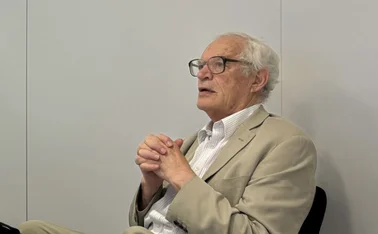
Here CentralBankNet reproduces some questions and answers from the exclusive interview with Anwar Ahady, an Afghan national and the new governor of the central bank of Afghanistan.
So you would like to employ local Afghans, but they are not as trained or educated as they should be and expatriates are too expensive?
Yes, that's right. I think it will take two to three years to produce someone that's good enough and run them through the banking institution to become a productive employee.
Afghanistan has been through Soviet-style banking, Taliban-style anti-banking and now operates essentially through bazaars - what kind of banking system do you envisage for Afghanistan?
We envisage a more free-market orientated banking system. Then, eventually, the central bank would be just responsible for monetary policy, the currency issue and controlling inflation.
What practical measures are you taking to achieve this?
First of all we have to revise the banking law. And when we have done that, we envisage a more free market operation and that will require private banks, hopefully some Afghan private banks, some regional private banks and perhaps international banks. Unless we revise the law this is not likely to happen. We are moving on that pretty quickly, so within a month or so we will have a proposal or draft of a new banking law for the government. If it's ratified we will move in the direction of some sort of privatisation of the existing banks and allowing other
banks to open here.
So a proposal might be to privatise or to encourage the establishment of new banks?
We will look at the existing banks and see whether they are viable or not. We are not against existing banks, but they have to demonstrate that they are profitable.
What are your targets for the Afghan economy in the next six months to a year?
In terms of growth and inflation, to be honest with you, it would be difficult for us to come up with really a quantitative figure. There has been very little time to address these issues. Given
the fact that there is going to be a lot of new money coming in and the government is going to spend it we are going to have some degree of inflation. But, it is hard for me to come up with
a number that I would have very good arguments to substantiate. I will establish the targets and the figures in the future.
I understand that your wife is also involved in the political side of rebuilding the regime.
Yes, that's true. She will definitely be involved in politics and probably get involved in the legislature in Afghanistan. She is a true patriot and is willing to accept the hardships of living and working in Afghanistan. I think it was patriotism that pushed me here too - definitely not the financial reward - this is a total financial loss for me!
Are you missing Rhode Island at all?
Well I miss being in the west in the sense that I don't have access to the internet here, I don't have my morning newspaper. And the security situation is not such that I can move freely. Those are the kind of things I miss. Unfortunately now that the city has somewhat revived, there is also growing pollution. That bothers me - I wish that the government would move quickly on this, because the city is becoming so polluted. Yes, in this sense, I miss Providence, but this is an exciting job and a challenging job. It's extremely tiring, but I still love it.
Only users who have a paid subscription or are part of a corporate subscription are able to print or copy content.
To access these options, along with all other subscription benefits, please contact info@centralbanking.com or view our subscription options here: www.centralbanking.com/subscriptions
You are currently unable to print this content. Please contact info@centralbanking.com to find out more.
You are currently unable to copy this content. Please contact info@centralbanking.com to find out more.
Copyright Infopro Digital Limited. All rights reserved.
As outlined in our terms and conditions, https://www.infopro-digital.com/terms-and-conditions/subscriptions/ (point 2.4), printing is limited to a single copy.
If you would like to purchase additional rights please email info@centralbanking.com
Copyright Infopro Digital Limited. All rights reserved.
You may share this content using our article tools. As outlined in our terms and conditions, https://www.infopro-digital.com/terms-and-conditions/subscriptions/ (clause 2.4), an Authorised User may only make one copy of the materials for their own personal use. You must also comply with the restrictions in clause 2.5.
If you would like to purchase additional rights please email info@centralbanking.com