CentralBankNet Monday Special Feature

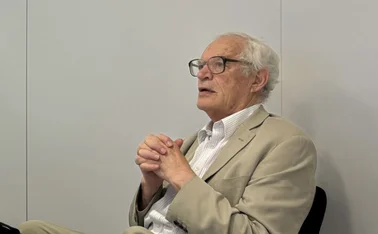
SPECIAL FEATURE - Ernesto Savona, professor of law and criminology at the Catholic University of Sacro Cuore of Milan, recently gave an exclusive interview to The Financial Regulator journal. In the interview he said that a political decision to stamp down on tax evasion was the key to cracking down on financial crime.

Click here to find out more about The Financial Regulator Journal

Ernesto Savona, professor of law and criminology at the Catholic University of Sacro Cuore of Milan, spoke to Neil Courtis.

Over the last decade, and in particular over the last few years, enormous efforts have been made to combat economic crime, and especially money laundering. Do we know anything about how criminals are reacting to this?

Obviously, much crime is neither discovered nor reported, but looking at the data which we have, we can see some trends. Most obviously, the distinction between organised and economic crime is breaking down as organised criminals commit more economic and financial crime, and are thus more involved in legitimate economy. Of course organised criminals still sell drugs, but they are opportunistic: they may now be more likely to get involved in fraud than narcotics.

Is this picture true for Europe?

If you look at the activities of the Italian Mafia now, and in ten years time, you will see a much greater infiltration of the legitimate economy. Similarly, the Mafia is more involved in corruption (and is making more money as a result) and less involved in violence and murder. Just as in the US, the sons and daughters of the Mafia now go to university, and this feeds into the process. In order to penetrate the legitimate economy, organised criminals need to control ostensibly legitimate companies. Now, instead of relying on a consultant, they can go to people they really trust: their college-educated children. Sometimes traditional organised criminals are no longer involved in prostitution or 38

Ernesto Savona is professor of law and criminology at the Catholic University of Milan and director of Transcrime research centre on transnational crime at Trento University in Italy. He has been consultant to the Council of Europe, the European Union and various national governments. From 1990 to 1994, he was a visiting fellow and project director at the National Institute of Justice, Research Centre of the US Dept. of Justice, Washington DC, where he was manager of two projects on organised crime and international money laundering. He has been visiting professor at the Yale Law School, Oxford (Wolfson College) and Cambridge (Dept. of Criminology). Professor Savona has published several papers and books on organised and economic crime and their relationships with the criminal justice systems. Economic crime narcotics at all. They have given up "dirty crime" to incoming organised crime groups. Prostitution in Italy is quite clearly no longer in the hands of the Mafia, it is now controlled by new criminal groupings, mainly from Albania. You will see the same picture in Russia in ten years time, with organised crime moving along a continuum from dirty to clean markets.

How effective has the international campaign since 1989 to stamp out money laundering been?

On the positive side, these initiatives have resulted in a comprehensive set of measures - anti-money-laundering laws, and new institutions - being developed all over the world. However, it is not really clear to what extent these laws have been implemented. Many countries sign new legislation with one hand and accept dirty money with the other. It is, of course, important to ratify treaties, and have good legislation. But it is also important to measure the impact that these measures have; which is a totally different thing.

The IMF now spends a lot of time trying to assess and measure the strength of national anti-money-laundering systems. Is this a way forward?

I don't want to take a negative stance, but international organisations tend to see the establishment of an organisation, or the passage of a law as an effective outcome. For me, an effective outcome is that criminals who want to launder money find it harder and more expensive to do so.

How do you measure outcomes?

You need to set up a research programme. People continually confuse outputs with outcomes. Getting a new law on the statute books is the output, but the outcome we desire is less money laundering. I want to measure the outcome rather than the output.

What kind of work is being done along the lines you suggest?

Transcrime (of which I am the director) is trying to develop a model for assessing the risk of economic and organised crime so as to help law enforcement officials and policymakers to choose laws or policies which reduce the risk of crime. There are two key elements to such a model: first, an evaluation of the probability of a crime - money laundering, organised crime or whatever - taking place; second, an assessment of impact or harm. While this is an academic model, our aim is that it should be user-friendly enough for law enforcers or policymakers to use in order to understand what resources to allocate to reducing terrorism or economic crime or something else. There are no free lunches; if you combat more terrorism you will combat less other crime. Another use of this kind of model would be "crime-proofing" new legislation. Let me give you an example: at the moment, when legislators decide to regulate a market - for banking services or pharmaceuticals - they do not systematically examine the possible impact of this new regulation on crime. Let's say you make it more difficult for an enterprise to get credit from the banking system, then those people who can't get legitimate credit will tend to go to loan sharks. Thus regulation can create an opportunity for organised crime. Deregulation can have the same dangers. If you deregulate the government's procurement system you may make it easier for organised crime to infiltrate the process. Construction projects are particularly vulnerable in this respect. What we want to create is a simple framework which can flag potentially problematic proposals, and say "this proposal scores high on its potential to increase crime, watch out!"

Surely some things are quite easy to measure. For instance you can look at the amount of money which authorities have seized.

You have picked a very good example of the importance of good data. We often hear authorities announcing how much money or how many bank accounts they have frozen. What is not publicised is what proportion of these frozen funds is eventually confiscated, and what proportion returned. In fact, data on the amounts of money confiscated as proceeds of crime in each country is very poor. When you investigate, (as we recently did for the countries in the European Union) you discover that the amount of money that is actually confiscated as a result of all this effort is tiny. What happens too often is that assets or bank accounts are frozen, but then after two or three years the money is returned. This is a waste of enforcement resources. The reason why the data is so bad is that member states don't want to publish embarrassing statistics - for instance that they seized assets worth $10m but eventually gave back 95%. My question, when examining how well arrangements are working is always: how much money are you taking out of the pockets of criminals?

Is that really the situation, that almost all frozen funds are eventually returned?

According to our best knowledge in the EU around 90% of frozen assets are eventually returned. The US keeps a little more, so that (according to estimates) about 25% is confiscated, Australia manages the same: 25%. Italian results are very poor. The British have new legislation which should be more effective, and the Irish have possibly the best legislation in the EU. The Irish use a civil RICO1 system, similar to the US system. This means they use a civil law procedure to seize a criminal's house and assets, and this process works separately from any related criminal conviction. The defendant has to show where the money to support a lavish lifestyle is coming from. Obviously this is shifting the balance of proof and there was some debate about the extent to which this is constitutional. But it is working very well.

Your Euroshore2 research for the European Commission examined whether offshore centres were a source of economic crime. What role do they play?

We did a significant piece of research into the use of offshore financial centres by money launderers and the conclusion was that they do have a lot of problems, but that we in Europe have problems also. The report concluded that for Europe to demand that others put their houses in order, it was necessary that the EU first put its own house in order. The commission took this report very seriously and things are improving month by month. The United Nations is bargaining with offshore centres to try and get them to improve transparency standards. Of course they are not all necessarily willing to do that, but there is a lot of political pressure on them, and sensible improvements are being made as a result of pressure from the OECD, naming and shaming, and so on. Of course if you want to go and launder money there are still plenty of people who will help you do that.

What do you make of the complaints from offshore centres that they are being treated unfairly? That they are being forced to abide by standards which they have not had a hand in creating?

There are a couple of questions here: first, should there be different transparency standards? Second, what is our right to impose transparency standards on others? These questions need to be seen in the context of globalisation. Globalisation is the process by which individuals and companies exploit the opportunities of a global market. For manufacturing this might mean making things in Albania rather than Italy to take advantage of cheaper labour costs. For financial services, the primary way countries can create opportunities like this (officially at least) is by more lenient fiscal regimes. Offshore centres don't ostensibly offer services to money launderers or corrupt officials, ostensibly what they offer is legislation which allows individuals and companies to pay less tax. The offshore centres would argue that it is not their fault if this legislation is in fact used by money launderers or criminals. There is another element to this question: who reaps the most benefit from offshore centres, the centres themselves, or the rich developed countries who use them? When you consider that 80% of capital going offshore is not local capital, the answer is pretty clear. This puts the world's richest countries in a strange position. On the one hand we are writing to offshore centres demanding that they do this and that. On the other it is our citizens who are providing the majority of their business!

One of the things which you highlighted in the Euroshore research was the importance of good company law. Why is that so important?

After we highlighted these concerns in the Euroshore report, the commission asked us to investigate how transparent company law is in the EU. We measured the differences in company law among 15 member states. We found that the biggest problems, and the source of the greatest opacity in the system, were connected to the beneficial ownership of companies. Often the beneficial owner was identified as another company. What we need to know of course is the real beneficial owners, the individuals.

The whole debate on these issues, and in particular the stance of the US administration, changed after September 11 2001, and the most obvious result is the wide-ranging US Patriot act. Will the Patriot act work do you think?

It is innovative in that it is trying to change the perspective of the problem. Traditional money laundering legislation tries to locate money flowing from a crime. The Patriot act tries instead to find money going into financing a crime, in this case terrorism. This is a good thing, but almost an impossible task. If, as we have found, it is very difficult to link crime with the money produced. It is going to be much more difficult to link possibly legitimate money with the future financing of crime.

So, looking back at your cost benefit approach, can you prevent terrorism by trying to choke off terrorists' funding?

It could be done, but it is not the only component in efforts to prevent terrorism, just as working on money laundering is not the only element in preventing organised crime. In conjunction with other policies to deny opportunities to terrorists it could work. 42 Economic crime

There is an increasing discussion about the use of hawala and other alternative remittance systems to launder money. How much of a problem do you think they are?

In certain regions hawala and other alternative remittance systems are probably being used to launder money. Especially when you are talking about transfers of value between two countries without welldeveloped monetary systems like perhaps Afghanistan, and parts of Africa or India. But once you are making a transfer to a developed country you need to get your funds into the banking system where they will earn a return and be secure.

Finally, looking at the big picture, what can regulators actually do to fight economic crime and money laundering?

Clearly, we need more harmonisation in regulation. But the single most important measure which would make anti-moneylaundering systems more effective and financial markets more transparent would be to agree that tax evasion everywhere was considered a predicate offence for money laundering. Countries internationally need to make a decision about this and it is only this decision which will separate the new era of AML from the past. Once you add tax evasion to the list of predicate offences, you immediately remove the main excuse which the banking system uses to block investigations. Criminal tax evasion should be prosecuted just as any other economic crime. As things stand, Switzerland does not agree to release information from the banking system if the information is going to be used to investigate tax evasion. Offshore centres agree to share information on corruption or money laundering but not on tax evasion. The reason is simple: they make their living on funds that are evading tax. If you have a small amount of money coming from drug crime, it is clear that that money is also evading tax. How can you distinguish the two? It is an impossible task. Refusal to share information about the proceeds of tax evasion just acts as a shield for money launderers.

Why does this not happen?

It is an incredibly politically-sensitive issue. Look at the European Union. The EU have harmonised standards in almost every area of economic activity, but they have not been able to harmonise taxes at all. How can we persuade others to do the thing we have not been able to do ourselves?

Only users who have a paid subscription or are part of a corporate subscription are able to print or copy content.

To access these options, along with all other subscription benefits, please contact info@centralbanking.com or view our subscription options here: subscriptions.centralbanking.com/subscribe

You are currently unable to copy this content. Please contact info@centralbanking.com to find out more.

Most read articles loading...

You need to sign in to use this feature. If you don’t have a Central Banking account, please register for a trial.

Sign in
You are currently on corporate access.

To use this feature you will need an individual account. If you have one already please sign in.

Sign in.

Alternatively you can request an individual account

.