

Norway signals further easing as it cuts again
Norges Bank expects inflation set to fall back to 2% over the forecast horizon
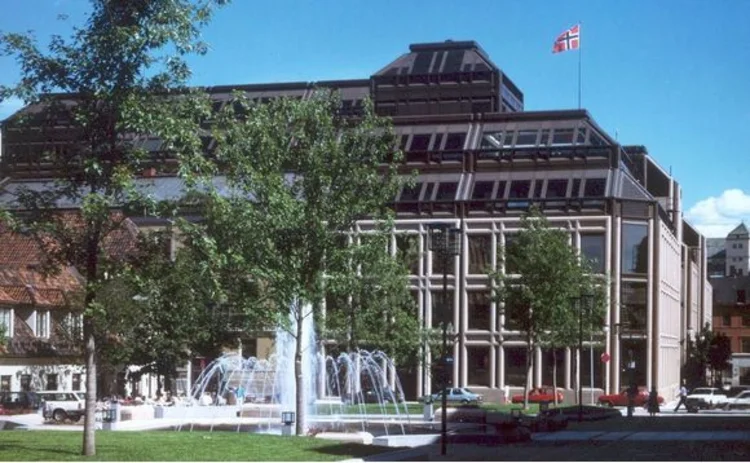
Norway's central bank cut its key rate by 25 basis points to 0.75% today, with a view to imposing another similar sized cut later this year.
Norges Bank cited weaker growth forecasts as a key motivation for the move, on the back of lower-than-expected oil prices and investment.
Inflation, excluding energy products and adjusted for tax changes, is running at 3% in Norway, but the headline figure is projected to drop to 2% by 2018, offering the central bank space to ease policy.
Governor Øystein Olsen said "the key policy rate may be reduced further in the coming year", while the executive board added that, under its current outlook, it would likely be reduced to "just above 0.5% in 2016".
The move resulted in the krone depreciating by 2.7% against the euro, suggesting it was not expected. Joachim Bernhardsen, an analyst for Nordea, said his team "had not expected Norges Bank to cut rates" in a public note.
Since June, the krone has slid against the euro, falling by 8.8% to date. The executive board noted the exchange rate pass through "appears to be stronger than expected", lifting inflation. It expects the currency to appreciate "somewhat" but still remain weaker than predicted in June.
A decline in demand for labour has lead the bank downwardly revising its wage growth figures, which will work to restrain inflation, as it ultimately will reduce the demand for goods and services.
The central bank predicts annual CPI inflation to reach 2.75% in 2016, before declining to 2% by 2018. Conversely, GDP rates are set to climb steadily from 1.25% at the end of this year to 2.5% at the end of 2018.
"Growth prospects for the Norwegian economy have weakened, and inflation is projected to abate further out," said the governor.
The central bank now has to perform a balancing act; in lowering the key rate, it remains wary of fuelling property price inflation and debt growth.
Only users who have a paid subscription or are part of a corporate subscription are able to print or copy content.
To access these options, along with all other subscription benefits, please contact info@centralbanking.com or view our subscription options here: www.centralbanking.com/subscriptions
You are currently unable to print this content. Please contact info@centralbanking.com to find out more.
You are currently unable to copy this content. Please contact info@centralbanking.com to find out more.
Copyright Infopro Digital Limited. All rights reserved.
As outlined in our terms and conditions, https://www.infopro-digital.com/terms-and-conditions/subscriptions/ (point 2.4), printing is limited to a single copy.
If you would like to purchase additional rights please email info@centralbanking.com
Copyright Infopro Digital Limited. All rights reserved.
You may share this content using our article tools. As outlined in our terms and conditions, https://www.infopro-digital.com/terms-and-conditions/subscriptions/ (clause 2.4), an Authorised User may only make one copy of the materials for their own personal use. You must also comply with the restrictions in clause 2.5.
If you would like to purchase additional rights please email info@centralbanking.com
More on Monetary Policy
BoE deputy signals more hikes in ‘low-hire, low-fire’ dynamic
Headline employment figures mask young people’s work woes, Lombardelli tells watchers conference

Waller rules out using balance sheet as he floats 50bp hike
Fed governor also questions whether a ‘stable’ US labour market is a ‘healthy’ one

SNB could reintroduce negative rates – Schlegel
Bank sets higher bar for going below zero, but chair says it will act if price stability is at risk
Canada’s Tiff Macklem on the US trade dispute, AI and framework renewal
BoC’s governor speaks about declining economic resilience, the need for decisions despite policy dilemmas, Canada’s new structural model, lessons from QE, and more

Czech Republic raises rates in split vote
Governor says decision, reached by 4–3 majority, is ‘fine-tuning’ to curb inflation expectations

French gridlock will test Lagarde’s successor, economists say
Appointment of next ECB chief could mark ‘turning point’ for monetary union
Riksbank delivers first rate hike in three years
Central bank cites rising costs stemming from conflict-driven supply disruptions

ECB says no options ‘off the table’ on green dual rates
French parliamentary report claims cheaper lending for transition projects needs no treaty change