

Fischer laments lack of coordination between US regulators
Fed vice-chair warns regulatory cooperation weaker than other countries
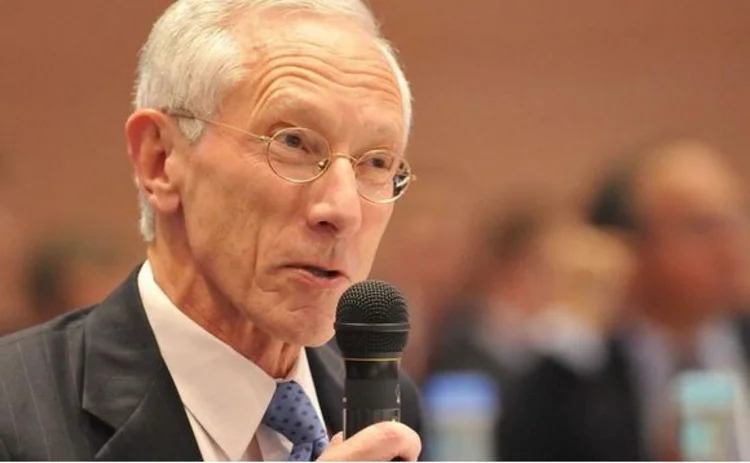
Financial supervision in the US suffers because of a unique lack of coordination between the US's myriad regulators, Federal Reserve vice-chair Stanley Fischer warned today (July 17).
"More coordination would be very useful," Fischer said, during remarks at an event hosted by the US Chamber of Commerce. Members of the chamber had complained that in having to deal with four or five different regulators, they are often given conflicting instructions.
"It's a pity from the viewpoint of the system
Only users who have a paid subscription or are part of a corporate subscription are able to print or copy content.
To access these options, along with all other subscription benefits, please contact info@centralbanking.com or view our subscription options here: www.centralbanking.com/subscriptions
You are currently unable to print this content. Please contact info@centralbanking.com to find out more.
You are currently unable to copy this content. Please contact info@centralbanking.com to find out more.
Copyright Infopro Digital Limited. All rights reserved.
As outlined in our terms and conditions, https://www.infopro-digital.com/terms-and-conditions/subscriptions/ (point 2.4), printing is limited to a single copy.
If you would like to purchase additional rights please email info@centralbanking.com
Copyright Infopro Digital Limited. All rights reserved.
You may share this content using our article tools. As outlined in our terms and conditions, https://www.infopro-digital.com/terms-and-conditions/subscriptions/ (clause 2.4), an Authorised User may only make one copy of the materials for their own personal use. You must also comply with the restrictions in clause 2.5.
If you would like to purchase additional rights please email info@centralbanking.com
More on Financial Stability
Paraguay’s central bank rebuffs bank supervision criticism
Several politicians have called on BCP leadership to resign over supervision of Ueno Bank

French riots hurt investor confidence as budget impasse lasts
Deteriorating fiscal outlook and political paralysis unsettle sovereign bond markets

Central banks monitoring global cyber security threat
Security agencies urge organisations to implement immediate updates or take systems offline

BoE probes Barclays’ handling of private credit loans
FT report says PRA investigating misallocation of derivatives following internal complaint
Georgieva: love it, hate it or fear it, AI is here
IMF MD’s ambivalence contrasts with Macklem’s cautious optimism and Anthropic policy chief’s bullishness

Dan Katz on the IMF’s role amid a fracturing economic system
The first deputy managing director speaks about the fund’s efforts in technical assistance, central bank guidance, debt workouts and surveillance in a system beset by fiscal imbalances, geopolitical fissures and digital disruption

Yue: China’s growth issues won’t impact yuan internationalisation
HKMA chief also says rising long-term bond yields have not affected Hong Kong

Supervisory culture at Fed a ‘decades-long problem’ – Bowman
Vice-chair says there will be restructuring, while ‘tailoring’ of regulations will also change