

Trichet notes exchange-rate instability fears
"We're concerned about excessive exchange-rate moves in the present circumstances," said Trichet following a meeting of some of the world's top central bankers in Basel on Monday 10 March, adding that he had "noted with extreme attention" the US authorities' statement reaffirming that a strong dollar was in the interests of the US economy.
The euro fell slightly following the comments, however it quickly recovered, indicating little expectation among market participants of an ECB-led intervention in foreign exchange markets.
"There is nothing new in this statement. He has always been concerned," Daniel Gros, the director of the Centre for European Policy Studies told Central Bank News, adding that any intervention into the foreign-exchange market was unlikely to occur anytime soon.
The ECB last intervened in 2000.
Trichet is the latest high-profile figure from the region to comment on the rapid rise of the single currency, which has appreciated by 5.1% against the greenback since the start of the year.
Jose Manuel Barroso, the president of the European Commission, said last week that the currency's value was "a matter of concern in some sectors of our economy."
Only users who have a paid subscription or are part of a corporate subscription are able to print or copy content.
To access these options, along with all other subscription benefits, please contact info@centralbanking.com or view our subscription options here: www.centralbanking.com/subscriptions
You are currently unable to print this content. Please contact info@centralbanking.com to find out more.
You are currently unable to copy this content. Please contact info@centralbanking.com to find out more.
Copyright Infopro Digital Limited. All rights reserved.
As outlined in our terms and conditions, https://www.infopro-digital.com/terms-and-conditions/subscriptions/ (point 2.4), printing is limited to a single copy.
If you would like to purchase additional rights please email info@centralbanking.com
Copyright Infopro Digital Limited. All rights reserved.
You may share this content using our article tools. As outlined in our terms and conditions, https://www.infopro-digital.com/terms-and-conditions/subscriptions/ (clause 2.4), an Authorised User may only make one copy of the materials for their own personal use. You must also comply with the restrictions in clause 2.5.
If you would like to purchase additional rights please email info@centralbanking.com
More on Reserves

Pacific series: Tonga’s governor on putting the central bank back in driver’s seat
Tatafu Moeaki speaks about monetary policy modernisation and capacity building in a small economy with limited resources and external vulnerabilities

Reserve managers weigh new risk-return equation
Central bankers tell virtual meetings there is no ‘universal safe haven’ as they prepare for next crisis

Reserve managers say gold is politically toxic to manage
Treasuries still used as preferred hedge despite increasing diversification away from dollars

Working group minutes: Cautious exit from dollars
Central banks are contemplating gold, emerging market assets and equities to diversify

Most central banks have raised dollar shares – study
Geopolitics drove institutions to buy gold, rather than move away from greenback, paper argues
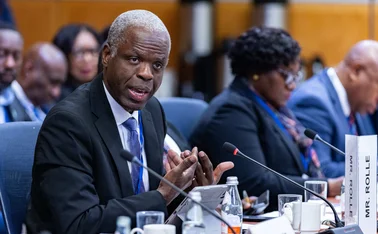
Bahamian economy faces ‘elevated’ downside risks – Rolle
FX reserves more than adequate to support currency’s US dollar peg, central bank governor says

The risks and returns of ever-expanding swap and repo lines
Increase in central bank swap agreements and repo facilities should help to counter future liquidity squeezes. But the proliferation is fraught with political risk

Reserve Benchmarks 2026 – model banks analysis
Additional data breakdowns shed light on AI use, liquidity lines and FX interventions