

Crypto custody a bit(coin) closer after US accounting U-turn
Federal banking supervisors expected to eventually relax regimes for safeguarding digital assets


Fresh accounting guidance from the US markets regulator has removed a barrier to banks offering crypto custody services. Now, lawyers expect prudential regulators also to take action to unlock bank custody of digital assets – particularly given the new US administration’s avowed support of the crypto industry.
The issue of crypto safety has now “really been kicked” to the banking regulators, says Steven Lofchie, partner at Norton Rose Fulbright US. “Do they act to discourage the banks from holding crypto assets as custodians? Do they say it is too risky for them to do so? Obviously, you have an administration now that is not crypto hostile. So it is to be expected that the banking regulators will become less crypto hostile.”
In January, the US Securities and Exchange Commission rescinded Staff Accounting Bulletin 121, which advised banks to recognise custodied crypto assets as a liability on their balance sheets. Although SEC staff guidance is not legally binding, regulated firms generally adhere to it.
When SAB 121 was issued in 2022, the SEC justified its stance by pointing to the “significant technological, legal and regulatory risks” involved in taking custody of crypto assets. Indeed, crypto exchanges have fallen victim to theft of digital assets, notably the loss of $1.5 billion worth of tokens from exchange Bybit in February.
Banks have long lobbied against SAB 121, arguing that the guidance was anomalous because other types of custodied assets are held off balance sheet.
Matthew Bisanz, a partner at law firm Mayer Brown, argues that the guidance had little prudential value for banks.
“I don’t think it was prudent to recognise crypto custody as a liability,” he says.
Bisanz explains that banks are exposed to various other types of risk that are not necessarily recognised as a liability on the balance sheet.
“Just because a bank is based in Florida, we wouldn’t expect it to have an extra liability for the risk of a hurricane hitting a branch, would we? Nor would we say that a bank with branches in a high crime area should hold a liability against the risk of someone breaking into safe deposit boxes,” he says.
“So why should we make banks hold an extra reserve for the risk of something bad occurring to crypto that the bank has custodied?” he adds.
Another reason that banks opposed SAB 121 was that adding crypto assets to the balance sheet could trigger increased capital requirements under regulations for which the SEC is not responsible.
Lofchie says: “The SEC has authority over what [bank] balance sheets look like, and SAB 121 made their balance sheets look very unattractive if they provided custody with respect to crypto assets. So that problem has now gone away.”
SAB 121 didn’t apply to all custodians. The SEC revealed in September that it had granted an exemption to the crypto custody service of a US bank – later revealed to be BNY Mellon – from the scope of the guidance.
Nevertheless, a spokesperson for BNY Mellon says the removal of SAB 121 is a “big move for the industry” because it “helps level the playing field between banks and non-banks”.
Gabe Rosenberg, partner at Davis Polk & Wardwell, agrees that the SEC’s decision is “a big deal” for the industry. Allowing banks and other firms to custody crypto in a way that doesn’t increase the size of balance sheets is “one of the several reasons I think people are excited about that”, he says.
Banks are now waiting for more meaningful change from prudential banking agencies: the Federal Reserve, Federal Deposit Insurance Corporation (FDIC) and Office of the Comptroller of the Currency (OCC).
In 2023, a joint statement from these agencies on crypto asset risks to banking organisations warned of “legal uncertainties related to custody practices”.
A letter issued on February 20 by six trade bodies including the Bank Policy Institute supports the idea of rescinding or revising federal banking rules that restrain banks’ ability to engage in digital asset custody, such as the FDIC’s FIL-16-2022, which requires the regulator be notified of banks engaging in crypto-related activities. The letter states the notification requirement has in effect led to banks needing a non-objection from the FDIC before proceeding with their plans.
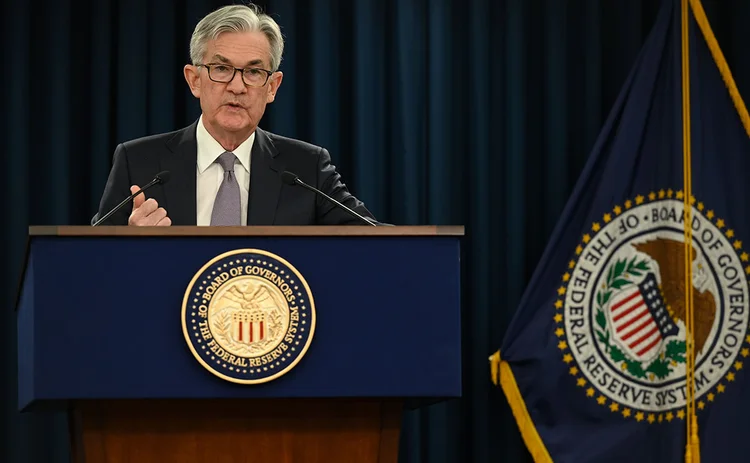
The three prudential banking supervisors declined to comment for this story. But in January comments, Fed chair Jerome Powell said banks are able to serve crypto customers as long as they understand and can manage the risks.
And acting FDIC chair Travis Hill in January proposed the agency adopt a more “open-minded approach to innovation and technology adoption”.
US president Donald Trump has nominated Jonathan Gould to lead the OCC. Gould previously worked at blockchain firm Bitfury, and served at the OCC during Trump’s first term.
Lawyers say the direction of travel is a more relaxed regime for bank custody of digital assets, but among prudential authorities the Fed is expected to move the slowest. Trump has said he does not intend to remove Fed chair Jay Powell before his term of office ends in 2026.
Adam Cohen, partner at law firm Skadden, expects the OCC’s Interpretive Letter 1179 – which requires supervisory non-objection for banking institutions to engage in crypto activities – will be “rescinded or revised, in fairly short order, or you’ll see supervisors be much more willing to actually non-object to those requests.”
Cohen adds that while it is clearly “a strong priority for the administration to be more open minded towards these activities, we’ll see how responsive the Federal Reserve is to that change.”
Bisanz says of federal banking regulators aligning behind the president’s digital strategy: “I think the FDIC and the OCC will go there. The Fed may take a little longer, but it will get there.”
Bisanz believes that within the next two years the Fed will repeal its SR 23-7 novel activities supervision programme, which permits the Fed to routinely monitor supervised banking organisations that are active in crypto and distributed ledger technology, among others. It will be “either an easier process or just as a matter of right for banks to engage in a wide variety of crypto asset-related activities,” says Bisanz.
Capital question
A second thorny issue prudential banking agencies may look to address is the capital that banks are required to hold for proprietary – as opposed to custodied – crypto assets.
International standard-setters the Basel Committee on Banking Supervision have proposed a 1,250% risk-weighted asset assessment for most cryptocurrencies held on bank balance sheets – essentially equivalent to a full deduction of capital.
Lawyers say, as a matter of permissibility, US banks holding proprietary positions of crypto is a grey area.
Skadden’s Cohen says there isn’t a clear prohibition on US banks holding crypto from a proprietary perspective; indeed, banks have done so on occasion. But he adds: “It’s long been an open question as to how one should characterise crypto based upon the traditional categories and taxonomy of bank permissible activities.”
Digital assets could be treated under generally accepted accounting principles as an intangible asset, meaning a punitive dollar-for-dollar capital deduction from Common Equity Tier 1, largely equivalent to Basel’s 1,250% risk weight.
Alternatively, if those assets were not designated intangible, but lacked an appropriate category, a catch-all 100% weighting would be a less punitive treatment.
Bisanz thinks the latter is the most likely outcome: “I would expect it to be treated like most other types of assets, where you have to hold eight cents on the dollar of capital.”
To settle points such as these, banks want all their supervisors included in the discussion. They question whether the president’s recent executive order on digital assets adequately reflects their business needs.
While Trump established a working group on digital asset markets whose members include the heads of the SEC and Commodity Futures Trading Commission, he notably excluded the prudential banking supervisors.
The working group’s remit includes identifying regulation to be scrapped or modified, as well as proposing a federal regulatory framework governing the issuance and operation of digital assets, including stablecoins.
The trade body letter sent on February 20 encourages participation from the federal banking agencies in this process. The letter was addressed to David Sacks, the White House’s special adviser for AI and crypto and chair of the working group.
This article was originally published in sister title Risk.net
Only users who have a paid subscription or are part of a corporate subscription are able to print or copy content.
To access these options, along with all other subscription benefits, please contact info@centralbanking.com or view our subscription options here: www.centralbanking.com/subscriptions
You are currently unable to print this content. Please contact info@centralbanking.com to find out more.
You are currently unable to copy this content. Please contact info@centralbanking.com to find out more.
Copyright Infopro Digital Limited. All rights reserved.
As outlined in our terms and conditions, https://www.infopro-digital.com/terms-and-conditions/subscriptions/ (point 2.4), printing is limited to a single copy.
If you would like to purchase additional rights please email info@centralbanking.com
Copyright Infopro Digital Limited. All rights reserved.
You may share this content using our article tools. As outlined in our terms and conditions, https://www.infopro-digital.com/terms-and-conditions/subscriptions/ (clause 2.4), an Authorised User may only make one copy of the materials for their own personal use. You must also comply with the restrictions in clause 2.5.
If you would like to purchase additional rights please email info@centralbanking.com
More on Regulation

Imminent US shake-up of LCR slated to include discount window
Adding Fed liquidity facility to bank regulation may help overcome stigma, raise lending capacity

UK FCA to investigate itself after whistleblower died by suicide
Regulator appoints ex-BoE official to examine procedures as it faces criticism from former staff

Permanent FRTB reforms seen as vital for IMA adoption
Temporary relief granted in June has done little to encourage internal model use in Europe

EU central banks want more sovereign bonds in stablecoin reserves
Micar review proposals include severing crypto interdependence with rival banks

Regulators better prepared for next Credit Suisse, says SRB head
FSB strengthening guidance on international co-operation, but EU needs more mutual support

US Clarity Act fails again in Senate
Democrats win over Republicans to oppose Trump-backed crypto bill

From Pillar to Pillar… to post: where now for op risk in Europe?
Experts think enhanced Pillar 2 charge informed by Dora would be more useful than a blunt Pillar 1

PRA struggles to follow Fed’s FRTB modelling moves
Market risk experts say minor differences in US rules add up to more incentives for IMA adoption