

ECB’s monetary policy is taking effect rapidly, says Lane
But chief economist warns tighter financing conditions could cause eurozone contraction
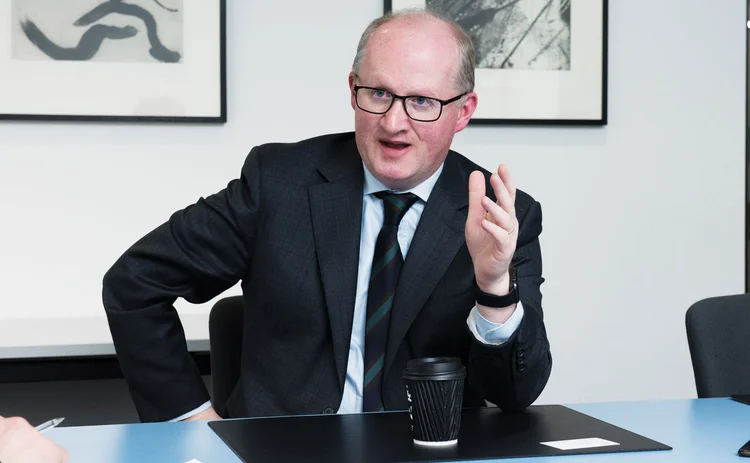
The European Central Bank is seeing rapid transmission of its monetary policy, especially via banking credit, its chief economist Philip Lane said on July 12.
But the eurozone is at risk of an economic downturn, Lane warned the US National Bureau of Economic Research’s summer institute in Cambridge, Massachusetts. Firms’ profits and households’ incomes had so far proved resilient as the ECB tightened policy, but that might change, he said.
“In the absence of new shocks that would drive the economy back towards the lower bound, the policy rate is expected to settle at around 2% in the medium term,” said Lane.
Lane said the ECB will run a restrictive policy long enough to bring inflation down to its 2% medium-term target in a timely manner. But after doing that, it will not keep policy tight for too long.
“The restrictive component of monetary policy will ultimately be unwound in order to stabilise inflation at our target rather than unleashing a subsequent phase of chronically below-target inflation,” Lane said.
The ECB’s key deposit rate is currently 3.5%. Many observers expect the governing council to increase the rate by 25 basis points at its next policy meeting on July 27.
Eurozone headline inflation fell to 5.5% year-on-year in June, down from 6.1% in May. But core inflation increased to 5.4%, from 5.3% the previous month.
More hawkish governing council members, and ECB president Christine Lagarde, have recently stressed that rates will need to be higher for longer. They have pointed to the eurozone’s sticky core inflation, high wage increases, and services inflation.
But their stance has attracted opposition from a growing number of governors of eurozone central banks. On July 5 Bank of Italy governor Ignazio Visco said he does not “understand and continue to disagree… with recently advanced observations that would lead us to prefer the risk of being more, rather than less, restrictive”.
Lane said unconventional policy tools such as quantitative easing and funding for lending programmes “are not expected to be re-introduced”. He added: “It follows that this normalisation component is expected to be essentially permanent in nature.”
Rapid policy transmission
Lane said monetary policy transmission is working faster than usual, with the eurozone’s banking channel working particularly effectively. Eurozone credit rates are higher and loan volumes lower since late 2022.
“The weakening in credit has been stronger than in past hiking cycles”, something only partly explained by “the unprecedented pace of policy tightening”, Lane said. “A model-based simulation confirms that loan volumes turned around faster than what would have been expected based on historical regularities.”
He said eurozone banks initially failed to offer higher rates to their depositors. This was partly caused by the long period of negative policy rates, when banks effectively kept their deposit rates higher than the ECB policy rate.
But banking credit had also tightened due to the combined effect of the ECB’s rate raises and its quantitative tightening programmes, Lane said. The ECB has stopped reinvestments of maturing bonds held under the Asset Purchase Programme (APP), and started phasing out targeted long-term refinancing operations (TLTROs).
The decline in APP assets “reduces the amount of duration extraction associated with the outstanding bond portfolio, and thereby increases term premia”, said Lane. “The resulting increase in long-term interest rates pushes up the pricing of bank loans, ultimately increasing lending rates for firms and households.”
He added: “The need to replace TLTRO funding requires the issuance of more costly bonds and leads to greater competition in deposit markets to attract funding.”
Rate hikes by the US Federal Reserve and other central banks should cause spillovers that increased eurozone funding costs, Lane said.
Risk of downturn
Lane warned the accumulated effects of these decisions will take a toll on economic activity.
He said the ECB was using replies to its bank lending survey “to construct a loan supply indicator”. Lane said this “purges credit standards from changes in loan demand and prevailing macroeconomic conditions”.
The indicator “shows a marked contraction in loan supply since the start of the tightening cycle,” Lane said. “This shift in loan supply conditions is even more remarkable in view of the highly accommodative loan supply environment in the years before the pandemic.”
The ECB estimated that a one percentage point decline in loan volumes results in a 0.3 percentage point reduction in real GDP. ECB research showed that the credit reduction triggered by tighter policy “in turn generates a substantial reduction in output, compared to the baseline path”.
“The resilience of the euro area economy may have limited the severity of the credit supply channel by boosting the incomes of firms and households,” Lane said. But he warned that “a downturn or reversal of these factors would amplify the current slowdown in credit”.
As tighter monetary policy’s cumulative impact increased, “the countervailing impact of these factors will plausibly decline”. Falling profits or a slowdown in household incomes could amplify the impact of the credit channel.
Only users who have a paid subscription or are part of a corporate subscription are able to print or copy content.
To access these options, along with all other subscription benefits, please contact info@centralbanking.com or view our subscription options here: www.centralbanking.com/subscriptions
You are currently unable to print this content. Please contact info@centralbanking.com to find out more.
You are currently unable to copy this content. Please contact info@centralbanking.com to find out more.
Copyright Infopro Digital Limited. All rights reserved.
As outlined in our terms and conditions, https://www.infopro-digital.com/terms-and-conditions/subscriptions/ (point 2.4), printing is limited to a single copy.
If you would like to purchase additional rights please email info@centralbanking.com
Copyright Infopro Digital Limited. All rights reserved.
You may share this content using our article tools. As outlined in our terms and conditions, https://www.infopro-digital.com/terms-and-conditions/subscriptions/ (clause 2.4), an Authorised User may only make one copy of the materials for their own personal use. You must also comply with the restrictions in clause 2.5.
If you would like to purchase additional rights please email info@centralbanking.com
More on Economics

ECB economists expect food inflation to rebound in 2027
Energy costs and weather are set to reverse a slowdown that began in January

Banrep paper proposes LLM-driven forecast method
Sequential design enables economists to study ‘information environment’

French prices half as sensitive to oil as in 2016 – BdF blog
Lower household fuel use and less oil-intensive production reduce pass-through to consumers
AI growth could offset effects of ageing in Asia – Georgieva
At launch of Shaping the Future of Asia, ex-governors discuss factors behind region’s growth

Little evidence of second-round inflation in UK – Bailey
BoE governor says economy more resilient than expected, amid signs of AI investment

Venezuela seeks shift to inflation targeting in medium term
Minister says dollarisation not ‘right answer’ and debt sustainability analysis to be published soon
Lagarde cools speculation of ECB rescue amid French debt woes
Central bank chief urges her home country to get its fiscal house in order

Fiscal consolidation still possible in France – Moulin
BdF governor says Europe facing twin shock from surge in energy costs and bond yields