Argentina raises rates again

Economic stability grows more distant as elections loom

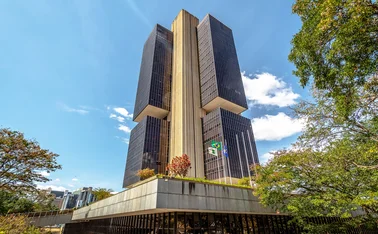
Central Bank of Argentina
Banco Central de la República Argentina

The Central Bank of Argentina (BCRA) raised its benchmark Leliq rate by 600 basis points, to 97%, on May 15.

The decision is the fourth rate increase in two months, as policy-makers continue their struggle against inflation and currency depreciation.

Since the start of 2022, the BCRA has nearly tripled the Leliq rate from 38%. In 2023, it has increased by 22 percentage points.

The decision follows the April inflation reading, which put year-on-year inflation at 108.8%, up from 104.3% in March. Prices rose 8.4% in April alone.

The inflation figures in turn reflect an intensifying economic crisis. Drought has diminished vital exports of agricultural products, compounding a chronic lack of foreign reserves and the decline of the peso. Between April 1 and May 10, gross official reserves have fallen from $38.8 billion to $33.7 billion.

A policy of capital controls has created parallel exchange rates, hindering the BCRA’s efforts to buy dollars that instead flow to the informal market. On the informal market, the US dollar is now worth about 480 pesos, compared with about 400 pesos a month ago.

The official rate is around 230–240 pesos to the dollar, and the central bank has managed a gradual devaluation of this rate via a “crawling peg”. Media reports indicated the BCRA would mount new interventions in the exchange markets alongside the rate hike.

Arturo Porzecanski, a research fellow at American University in Washington DC, says the central bank’s monetary policy “has been running behind the proverbial ball”. Its reactive policy means it cannot halt the peso’s slide or encourage “inflation-adjusted exchange rates” that would spur exports.

The central bank has offered to buy dollars from agricultural exporters at a premium over the official rate, through the “soy dollar” programme. However, the third round of the initiative has brought in less than $300 million, Infobae reported on May 16.

Cecilia Allami, a researcher in the political economy department at General Sarmiento National University, tells Central Banking that widespread expectations of further devaluation hinder the BCRA’s efforts.

With the peso falling, agricultural exporters are avoiding sales, and “economic agents prefer to convert their assets into dollars rather than making investments in pesos”, she says.

Georgina Gomez, an associate professor at the Institute of Social Studies of Erasmus University, Rotterdam, argues high inflation makes it very difficult to conduct any workable monetary policy.

“Argentines have decades of practice in defending themselves against high inflation. As soon as people receive pesos, if they need to ‘freeze value’ [save money], they immediately try to convert to dollars,” she says. “In the absence of trust on the authorities and on the currency, the BCRA can hardly find a policy that it can implement effectively.”

The International Monetary Fund granted Argentina a new financing package – worth nearly $43 billion at current exchange rates – in March 2022. The loan is in large part meant to roll over an earlier 2018 loan package, ultimately worth about $57 billion, which Argentina abandoned in 2020.

The loan conditions oblige Argentina’s central bank to set real positive interest rates and accumulate certain levels of net international reserves. The IMF also requires Argentina to phase out monetary financing of the state budget.

BBVA Research estimates the primary fiscal deficit in 2022 was 2.4% of GDP. It expects a 2.6% deficit this year.

Business paper El Cronista reported on May 12 that the central bank has provided 520 billion pesos ($1.08 billion) of short-term advances so far this year, more than 40% above the cap agreed with the fund.

Porzecanski says the government is trying to restock the reserves by asking the IMF to bring forward loan disbursements this year. However, he believes the fund may be worried the BCRA could divert that money from repaying the IMF itself.

Voting for Christmas and getting Lent

There is also a political dimension to Argentina’s economic problems. General elections are due in October, with primary elections in August.

The government is certain to increase spending ahead of the polls, Porzecanski says. “Pledges of even modest fiscal and monetary restraint carry little credibility,” he concludes.

However, Porzecanski doubts increased fiscal outlays will secure a second victory for the incumbents. President Alberto Fernández announced last month he will not seek a second term.

Because the opposition wants to liberalise the currency regime, many expect “a major devaluation possibly followed by an outright dollarisation”, Porzecanski says.

Mauricio Macri, president between 2015 and 2019, did attempt to liberalise exchange and capital controls. However, he failed to reduce fiscal deficits and undermined the BCRA’s inflation targeting policies. The result was a currency crisis and the 2018 bailout programme.

One candidate this year, a populist free-marketeer, has called for abolishing the BCRA and adopting the dollar.

“Dollarisation is not really a choice for several reasons – if it happens it will be in the middle of an extremely chaotic situation,” Gomez says. “No country abandons its currency out of choice, as far as I know, they do it as the last resort that can save them from drowning.”

Only users who have a paid subscription or are part of a corporate subscription are able to print or copy content.

To access these options, along with all other subscription benefits, please contact info@centralbanking.com or view our subscription options here: subscriptions.centralbanking.com/subscribe

You are currently unable to copy this content. Please contact info@centralbanking.com to find out more.

Most read articles loading...

You need to sign in to use this feature. If you don’t have a Central Banking account, please register for a trial.

Sign in
You are currently on corporate access.

To use this feature you will need an individual account. If you have one already please sign in.

Sign in.

Alternatively you can request an individual account

.