Paraguay’s governor on the ‘new normal’ and inflation targeting

Coping with a decline in the commodity 'super-cycle'

carlos-gustavo-fernandez-valdovinos-central-bank-paraguay-13-web
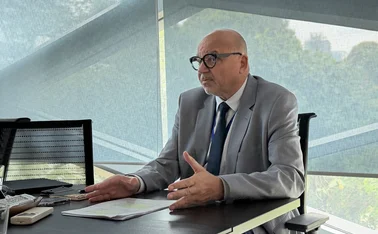
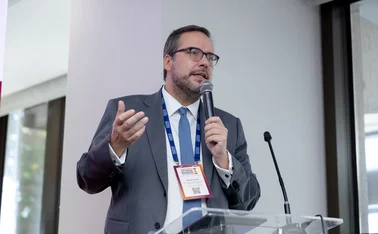
Carlos Fernández Valdovinos, Central Bank of Paraguay

You attended the International Monetary Fund/World Bank autumn annual meeting in Peru in 2015. How are Latin American central banks adapting to the new economic environment?

Everyone is aware that we are coming to the end of an economic cycle; the commodities super-cycle that represented 'golden years' for Latin American economies. That is now over; commodity prices are falling. We now need to prepare for the next cycle. We are entering a new normal or a new world as some people have called it. Tail winds are being replaced by head winds. So it is important to remember the words of Charles Darwin. He said, talking about species, those that survive are not necessarily the strongest, nor the most intelligent, but those that adapt better to new conditions. This applies to economies and we need to learn that, otherwise we are not going to be successful in the future. For Paraguay, we have to implement very clever macroeconomic policy to face this 'new normal'. That was the main conclusion in Peru.

How would you characterise the 'new cycle'?

Economies operating in the new cycle will have to contend with much lower commodity prices and tightening financial conditions, as well as unbalanced growth, both between and within regions. We are seeing some advanced economies recovering well and emerging economies decelerating at the margin. There are also differences between countries. Among advanced economies we can see the US recovering strongly, or at least better than Europe and Japan. You also see variations among emerging market economies with Peru, Colombia, and Paraguay performing better than countries such as China or Brazil.

At the centre of the outlook for emerging markets are concerns about Chinese growth. What do you see as the main channels affecting Paraguay, in particular, and Latin America more generally?

If China grows at a rate that is lower than 7%, it has a substantial global impact – it is almost like negative growth. Yes, relatively it is still a high percentage rate, and we wish we could grow at that rate – but for the Chinese economy, that is quite a deceleration, so we have to be prepared for the impact that might have. There are two channels through which China is affecting Paraguay. We are big buyers of Chinese products and also we send a lot of our commodities to China indirectly through Brazil, for example. China is also a main trading partner with Brazil, and Brazil is the main trading partner with Paraguay. With China decelerating, Brazil is decelerating – and that hits Paraguay.

Carlos Fernández Valdovinos was appointed Governor of the Central Bank of Paraguay in October 2013, for a period of five years.

He holds a PhD in Economics from the University of Chicago (1999), Master in Economic Policy from the University of Illinois at Urbana-Champaign (1994) and graduated in economics from the Federal University of Parana in Brazil (1990).

But I don't want to be too negative. This is a time to be realistic, but not negative. Countries will be better off if they acknowledge the new situation. In Paraguay, we have seen our growth rate fall in 2015, and this is likely to continue in 2016. Over the past decade, Paraguay grew at 4.8%. In 2015 and 2016, we will grow something between 3–3.5%. Historically, that is not a great result. But if you compare it with other countries around the world or in the region, it's a fantastic number. Economies work in a cycle. We are currently experiencing the downturn of the commodities super-cycle. We have to be smart in deciding which policies will help us in the future. We should not implement policies that could put macroeconomic stability in danger.


What kind of policy actions are you taking in Paraguay?

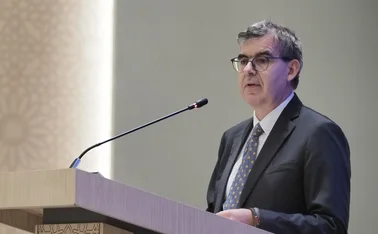
central-bank-of-paraguay-1The Central Bank of Paraguay

On the monetary policy side, we have an inflation-targeting regime, which is keeping inflation under control. We had a target of 4.5% for the last couple of years, and inflation was slightly below that target, so we had some room for manoeuvre. As expectations were well anchored, we had the opportunity to lower our policy rate in 2015, which we did, by 100 basis points. We believe that was enough to give some support to the economy. More than that would have been irresponsible. First you have to get inflation under control, and after that you can think about growth, and that is what we have done. On the fiscal side, the government has started pushing infrastructure investment. Paraguay is well behind in terms of quality and quantity of infrastructure. Over the last three years, the government was aggressive and increased capital spending. If you look at the numbers in terms of fiscal policy, the overall fiscal deficit this year will be something around 1.5% of GDP. That is not a bad number.

The second tool the central bank has is exchange rate flexibility. When you are vulnerable to commodity price shocks, the exchange rate can be an important tool to help the economy adjust. Paraguay saw soybean prices drop 40% between April 2014 and October 2015, which was a big external shock. Exchange rate flexibility helped us to adjust to that shock. But you also need credible monetary policy. It is for that reason we were able to depreciate around 25% year on year without any effect on the inflation rate.

Paraguay is undergoing a period of production diversification. We will continue to be a soybean and beef exporter, but we are also becoming more deeply involved in the production chains linked with Brazilian industry. Brazilian companies have looked at the costs in Brazil, and found that Paraguay has energy prices about 40% lower plus a '10:10:10' tax system: 10% VAT; 10% corporate tax; and 10% personal income tax. The labour force is low-skilled, but highly trainable. So Brazil sees Paraguay as a hub to produce more at far cheaper costs. So it is a win-win situation: Brazilian companies have found a place where production costs are cheaper, and Paraguay can exploit the job opportunities. This is the Maquila system, very similar to what Mexico has with the US. We started to produce very simple products, but over time, more and more companies are relocating to Paraguay. If we are going to adapt to this 'new normal', we need to diversify. Paraguay can no longer rely on high commodity prices. And we are finding a way.

Could you expand upon the strategy behind your foreign exchange interventions, whether you plan to continue with them, and how your reserves have been affected as a result?

We are conscious we cannot have an artificial exchange rate. Historically, that has been damaging to all countries in Latin America. For us, the flexible exchange rate is a way to face external shocks. The US dollar is strengthening against most currencies, including the euro, the Colombian peso, the Chilean peso and the Peruvian sol. This is a global trend. To fix the exchange rate for a prolonged period of time would be unsustainable and damage the economy. When we intervene in the market it is not to affect the trend of the exchange rate, but only to tame the extreme volatility. We're very careful in terms of intervention – if we try to fix the exchange rate at the end of the year or at the end of the day, we're going to just lose all our international reserves.

So we have an intervention policy that isn't really intervention. At the moment, the minister of finance receives a lot of US dollars for the budget through bond issuance and from royalties from the large electric dams that we share with Brazil and Argentina. If those dollars were pumped into the market, it would create a collapse in the US dollar vis-à-vis the guarani. We act as an intermediary for this process: the central bank buys from the treasury, we then go back to the market and resell the dollars, but gradually, not all at once. Sometimes the treasury wants to sell $100 million or $200 million, which is too much for the market. So we buy from the treasury and then feed it into the market slowly.

During 2015, most of the 'intervention' has been the dollars we purchased from the treasury. Only a small amount of dollars sold to the market came from central bank reserves. I believe out of $3.6 billion of owned central bank reserves, around $300 million was sold in the market during this year. We still have plenty of reserves which account for more than 20% of GDP, probably the second- or the third-largest in the region in terms of GDP, so we are very comfortable with the level of reserves we have.

What do you see as the merits of reducing the inflation target, and how have expectations responded? Have they anchored around the new target? 

carlos-gustavo-fernandez-valdovinos-central-bank-paraguay-sitting-13-webCarlos Fernández Valdovinos

On October 5, our national currency celebrated its seventy-second anniversary. This is quite an accomplishment for a region usually characterised by hyperinflation. So the Central Bank of Paraguay has a long history of being a very conservative central bank. In 2011, we started implementing what was considered the most modern approach to monetary policy – inflation targeting. For us, there is only one target within the policy horizon. When we say 4.5%, it's 4.5%. When we say 5%, it's 5%. There is no 5% +/–2 percentage points. It's 5%. It is quite important we accomplish that target. It's like a bicycle: when you start riding, you're scared, you don't know how to do it – but once you go and you gain some confidence, you become better at it. We were comfortable with the former target of 5%, but it was too high for a modern central bank. So at the beginning of 2014, we reduced the band. Before, the inflation-targeting band was defined at 5% +/–2.5 percentage points. That has been reduced to 5% +/–2 percentage points. Then in 2015, we reduced the target to 4.5% +/–2 percentage points. But it is still too high, so we are aiming to reduce it further slowly over time, to achieve the same target as other modern central banks in the region. Probably around 3%, like Peru, Colombia and Chile. But we have to move slowly.

Turning to financial stability, could you outline where you see some of the risks to the economy, specifically at home, and how you are in position to deal with them?

We are fortunate that Paraguay has not suffered a financial crisis for a long time, with the last significant crises in 1995, 1997 and at the beginning of the 2000s. Estimated cumulative costs of the crises for the economy, during this five-year period, were equivalent to 50% of GDP. Since then, we have been through a process of financial deepening within the banking sector. Previously, the banking sector contributed around 12–15% of GDP, now it is something close to 50% of GDP. We had strong growth during the commodity super-cycle, but right now we are, again, coming to the end of that cycle. We are in another cycle for the economy and also for the financial sector, and we need to prepare for that.

When it comes to risks in the financial sector, currency mismatches are one of the main risks under the new conditions. At the present, most lending is financed by deposits, rather than via bonds, which can be difficult to refinance. But there are forex deposits and lending as well as national currency deposits and lending. While there is no mismatch between assets and liabilities in forex at the system level, this might not be the case at the micro level. We find that out of the total amount of forex lending or forex credit that's been taken by the private sector, around 90% of it is taken by people who have a natural hedge – the main customers for banks in terms of forex lending are those working in the primary sector, those who work in US dollars. The soybean producers or the beef producers – those are the ones who are taking the dollars. Over time, corporations and individuals have learned that it can be very dangerous to be involved in forex borrowing, since there is a risk of depreciation. So ultimately, you can end up paying more interest than if you had chosen a national currency loan.

Nevertheless, in terms of financial stability, the system remains quite solid. Capital levels are well above what Basel III mandates. On average, the level of capital is between 14% and 15% of risk-weighted assets and contingencies. It's quite significant. The system is still performing very well. It is one of the most profitable in terms of returns on assets or returns on equity in the region. We need to be careful to allow the system to continue to work in this way, as it has been for the last 10 years. For that reason, the banking law that we were trying to pass in congress before the end of 2015 is very important as it will adapt our financial framework to international standards.

Why particularly is the banking law important?

The current General Banking Law is a product of the 1995 and 1997 banking crises. Prior to this, we had no regulation at all. When the crises occurred, congress and the authorities at the central bank decided to put everything in a single law, in a very detailed form. For example, in the law, there is a risk weight for every single asset. There is a definition of capital for banks: it's the sum of x, y and z. The law is the same for all banks, regardless of their risk matrices. Our current legal framework is quite rigid to ensure the efficient regulation of such a dynamic sector.

central-bank-of-paraguay-2Central Bank of Paraguay

But banks are not the same. Large banks serving the agriculture sector are different to small banks active in consumer loans. The law does detail the individual capital requirements for individual banks but not in the same way Basel III suggests in terms of efficiency. The current law has been useful for the last 10–15 years, but right now we need more flexibility regarding how to define capital, what is going to be the risk weight for an asset within a specific bank, and we also need to regulate systemic banks differently to small banks.

These are the changes we are hoping to make with the new law. I believe Congress understood what we were trying to implement; we ran a lot of seminars and also we went to Congress several times to explain why we wanted to make certain changes. The banking system now contributes 50% of GDP, whereas it used to be 15%. We need new tools to guarantee the banking sector will continue to work well and contribute to economic growth, and not be a factor of instability. We need a strong banking system that can face a possible crisis.

At the IMF/World Bank meetings, there was a discussion between six governors of Latin American central banks who gave their verdict on macro-prudential policy, suggesting the jury was still out. Do you think macro-prudential policy is or will be important for the region, and will Paraguay be adopting more measures over 2016?

We have learnt a lot regarding macro-prudential, micro-prudential and monetary policy during the recent global crisis. I mean, inflation seemed fine, individual banks appeared stable, and then suddenly the whole system collapsed. So something was missing.

The interest rate can only be used to solve one objective, and that is inflation. If we were to have another objective, we would need other tools. For individual banks, you have micro-prudential tools. For the systemic stability of the banking system, you have macro-prudential tools. Still, it's a new field. We are learning. Most of the tools were applied in emerging markets, and not in advanced economies. Some of them have been quite useful in preventing potential problems in the banking sector. But there is always the 'what if' scenario: "What would have happened, had I not implemented this policy?" You never know.

It is important to continue to learn – especially given the developments I have seen in Brazil, where I used to work. The evidence from Brazil, and from what I have seen in Paraguay, make me believe these tools can target specific sectors well. For example, the real estate sector – you can do something very surgical in only that sector. Monetary policy is too blunt; we need to have a tool that will attack individual sectors. If those sectors are really developing in a way that could create systemic risk to the banking sector, macro-prudential policy will be useful in the future. But we need to understand more about the efficiency of it. We also need to understand more about the interaction between monetary and macro-prudential policy, and also macro-prudential and micro-prudential policy. We still have a long way to go, but we are heading in the right direction.

Again, let me emphasise: one objective, one tool. We cannot use monetary policy to try to tame potential instability in the financial sector. It's too blunt.

carlos-gustavo-fernandez-valdovinos-central-bank-paraguay-standing-eu-meeting-13-webCarlos Fernández Valdovinos

Paraguay implemented a financial inclusion strategy in March. What do you hope to achieve from this initiative? 

I mentioned financial inclusion during my speech when I took office on October 3, 2013, as it is very important, especially in a country like Paraguay. It is true that the banking sector is much bigger now than previously, but we still have a lot of room to grow, in terms of customer engagement. Financial inclusion is not only a way to enhance the power of monetary policy, but also enhance the power of our anti-poverty policies in the country and reduce inequality. It is not just important that people have a bank account. Financial education and consumer protection is also important. As you mentioned, we have just released, with the help of the World Bank, our national strategy for financial inclusion.

We are working in many different areas to try and achieve our goals. At the central bank, for example, we have issued a regulation regarding basic savings accounts. These savings accounts have no reserve requirements. Before, it was costly to have a savings account that had only a small amount of money in it. People were put off by the large amount they had to deposit. We need to create conditions in the banking sector to make these accounts seem attractive to banks, so they will offer them to the general public. To that end, we implemented a regulation, a special regulation, which will make it easier for banks to offer this type of product to the lower-income population.

We have also implemented regulations around mobile banking. Mobile phones are quite important for attaining a higher level of financial inclusion, and have proved to be quite useful, in terms of granting greater access in many African countries already. Given the situation in Paraguay, we believe mobile phones will be also be key to our national strategy, as there are more mobile phones than people – in excess of 7 million. People have started to use mobile phones for payment transfers. It's safe. You don't need to carry cash, and it's fast. Added to that, the network infrastructure is already there. But we want to take it further than transfers, and begin to start offering credit. Once you have a history of transfers – the amount sent or received – you can use that to give credit, through a financial intermediary. Currently, we are not allowing mobile phone companies to grant credit to individuals. They have to work together in partnership with a bank or financial institution – and, given they have all the records, then they can start offering credit to those people who constantly use mobile payments. We think this is going to be a great tool in the future.

Have you made progress in the area of financial education?

We have taken quite an aggressive approach, with the body we created to focus on financial inclusion also looking at improving financial education. We have also signed agreements with non-governmental organisations that are also promoting financial inclusion and financial education. The central bank also signed an agreement with the ministry of education, which has incorporated a course in the curriculum for high school regarding financial education. In addition, we are offering several courses for teachers in rural areas, so they can pass on their knowledge to students. Through these channels, we hope to promote financial inclusion to the relevant audiences. Prior to these initiatives, we already had several things on the webpage – including, for instance, many cartoons, which makes it easier for kids to understand finance.

Do your efforts include any in the area of consumer protection?

On consumer protection, we are trying to generate more transparency related to some financial tools within the banking sector. Credit cards are a case in point. Financial deepening has resulted in many people signing credit card agreements. But some parties are not using them wisely, so we have created financial education programmes specifically to tackle this issue, as well implementing new transparency rules. Usually, interest rates on credit cards are higher than for other financial tools. In Paraguay, on top of interest, there are bank commissions and fees. Moreover, the use of different names across banks meant people struggled to compare different options. So the central bank issued a regulation standardising the name of different bank products, not just regarding credit cards, but also regarding checking (current) accounts, savings accounts, etc. Banks can still charge whatever they want because we do not fix prices at the moment. But people can compare the costs on our webpage. You can see all the different interest rates the banks are charging or paying for different financial products, and compare them across banks. These are some small steps we are taking in order to enhance consumer protection.

How is work progressing in modernising the high-value payment system and securities deposit systems?

Extremely well, once we finally launched in December 2013. The banking sector is naturally excited by the results, as the transaction volumes are very high. We have also extended activities well beyond the banking sector. The treasury, which has a high volume of payments, has been integrated and we are bringing more parties into the system. A good example is the social security system, another government body managing a lot of payments. I remember calling the president of the social security system once and asking him what he was doing. "I'm signing cheques," he said. "What? Why are you signing cheques?" I asked. He was amazed that I never sign cheques – instead, running payments through the real-time gross settlement system (RTGS). So he is working to move over to electronic payments. But we need to keep promoting the system. We have already implemented a regulation through which banks have to allow not only the transfer of money between accounts at the same bank, but across banks as well. The central bank was a key player in creating this system by pushing for modernisation and providing funds for what was a costly project. We provided the payment system to banks for free – but in return, we forced the banks to offer it to their customers for free.

What are the next steps?

We want to automate cheque clearance in 2016. At the moment, the system is very old-fashioned. Our mission is to get to the point where you can take your mobile phone, take a picture of the cheque and that will be enough to transfer the amount on the cheque. Using a mobile phone is something new, and we are aware of the security risks involved, and will create a system to mitigate these risks. We are already working on the technological developments. We hope that, in using these payment systems, we will be able to facilitate transactions in Paraguay for low amounts and increase access to the banking sector.

Are there any challenges that have emerged? Are the banks engaged?

We have had several meetings with banks, and they are now on board. Before, they were sceptical about implementing the RTGS, but its success has helped to build confidence. Currently, banks have to come to the central bank every day at 2:00pm with all their cheques. It's quite dangerous for them to clear them in this way. So they are happy another system is being created. And the same people that created the RTGS system are creating the electronic cheque capture system, which offers reassurance to the banks.

Only users who have a paid subscription or are part of a corporate subscription are able to print or copy content.

To access these options, along with all other subscription benefits, please contact info@centralbanking.com or view our subscription options here: subscriptions.centralbanking.com/subscribe

You are currently unable to copy this content. Please contact info@centralbanking.com to find out more.

Most read articles loading...

You need to sign in to use this feature. If you don’t have a Central Banking account, please register for a trial.

Sign in
You are currently on corporate access.

To use this feature you will need an individual account. If you have one already please sign in.

Sign in.

Alternatively you can request an individual account

.