

Organisations outline next step in plans to strengthen CCPs
Workplan sets out priorities for work on CCP resilience

International standard-setters have unveiled the latest stage of plans to improve the resilience of central counterparties (CCPs), in a pair of documents published on September 22.
Jointly released by the Basel Committee on Banking Supervision (BCBS), the Committee on Payments and Market Infrastructures (CPMI), the Financial Stability Board (FSB) and the International Organization of Securities Commissions (Iosco), the progress report and workplan outline the ongoing analysis of risks stemming
Only users who have a paid subscription or are part of a corporate subscription are able to print or copy content.
To access these options, along with all other subscription benefits, please contact info@centralbanking.com or view our subscription options here: www.centralbanking.com/subscriptions
You are currently unable to print this content. Please contact info@centralbanking.com to find out more.
You are currently unable to copy this content. Please contact info@centralbanking.com to find out more.
Copyright Infopro Digital Limited. All rights reserved.
As outlined in our terms and conditions, https://www.infopro-digital.com/terms-and-conditions/subscriptions/ (point 2.4), printing is limited to a single copy.
If you would like to purchase additional rights please email info@centralbanking.com
Copyright Infopro Digital Limited. All rights reserved.
You may share this content using our article tools. As outlined in our terms and conditions, https://www.infopro-digital.com/terms-and-conditions/subscriptions/ (clause 2.4), an Authorised User may only make one copy of the materials for their own personal use. You must also comply with the restrictions in clause 2.5.
If you would like to purchase additional rights please email info@centralbanking.com
More on Financial Stability

BoE probes Barclays’ handling of private credit loans
FT report says PRA investigating misallocation of derivatives following internal complaint
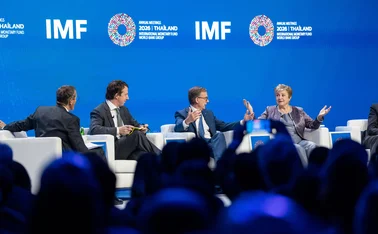
Georgieva: love it, hate it or fear it, AI is here
IMF MD’s ambivalence contrasts with Macklem’s cautious optimism and Anthropic policy chief’s bullishness

Dan Katz on the IMF’s role amid a fracturing economic system
The first deputy managing director speaks about the fund’s efforts in technical assistance, central bank guidance, debt workouts and surveillance in a system beset by fiscal imbalances, geopolitical fissures and digital disruption

Yue: China’s growth issues won’t impact yuan internationalisation
HKMA chief also says rising long-term bond yields have not affected Hong Kong

Supervisory culture at Fed a ‘decades-long problem’ – Bowman
Vice-chair says there will be restructuring, while ‘tailoring’ of regulations will also change

FSB outlines principles to guide regulatory ‘modernisation’
‘We have not seen people implement our recommendations and then move back,’ says John Schindler

AI, debt and cyber risk threaten financial stability – IMF
Combination of risks ‘may have much broader systemic implications’, says institution’s Vamvakidis

Stablecoins could let US firms prioritise some creditors – study
FDIC may be on hook if a bank issues coins before failing, Cleveland Fed researchers say