

Nigerian governor under parliamentary fire
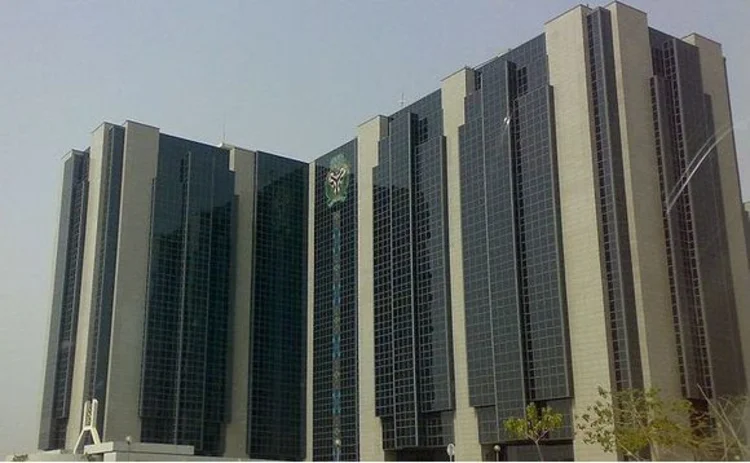
Lamido Sanusi, the governor of the Central Bank of Nigeria, has come under strong attack from parliament for his decision in August to bail out five of the country's banks.
Ogbuefi Ozomgbachi, the chairman of the House of Representatives committee on banking activities, accused Sanusi of acting unconstitutionally by authorising the injection of N420 billion ($2.7 billion) into the banks and sacking their chief executives for running the banks into insolvency without prior parliamentary approval. Ozomgbachi said such expenditure of taxpayer's money required this.
In his defence, Sanusi said failure to act speedily would have led to the banks' collapse, which would in turn have had serious implications for the national economy. He said the banks had run up non-performing loans worth N1.14 trillion ($7.6 billion), the scale of which was such that there was a very real risk of them triggering a systemic banking crisis. This and the fact that the central bank intends the new funding to be converted into Tier 2 debt or preference shares - and new investors for the banks found - meant the organisation acted within its remit.
"The central bank has therefore not contravened any law, including the 1999 Constitution, in the manner it intervened to save the five banks through the injection of fresh capital into their operations," Sanusi said.
The Central Bank of Nigeria has also published a list of Nigerian enterprises and businesses that it says owe the banks some N747 billion ($5 billion), although some of those accused of owing money have contested the allegations.
Only users who have a paid subscription or are part of a corporate subscription are able to print or copy content.
To access these options, along with all other subscription benefits, please contact info@centralbanking.com or view our subscription options here: www.centralbanking.com/subscriptions
You are currently unable to print this content. Please contact info@centralbanking.com to find out more.
You are currently unable to copy this content. Please contact info@centralbanking.com to find out more.
Copyright Infopro Digital Limited. All rights reserved.
As outlined in our terms and conditions, https://www.infopro-digital.com/terms-and-conditions/subscriptions/ (point 2.4), printing is limited to a single copy.
If you would like to purchase additional rights please email info@centralbanking.com
Copyright Infopro Digital Limited. All rights reserved.
You may share this content using our article tools. As outlined in our terms and conditions, https://www.infopro-digital.com/terms-and-conditions/subscriptions/ (clause 2.4), an Authorised User may only make one copy of the materials for their own personal use. You must also comply with the restrictions in clause 2.5.
If you would like to purchase additional rights please email info@centralbanking.com
More on Financial Stability

Rethinking capital-flow resilience in an age of recurring shocks
Amro’s Yasuto Watanabe and Takuya Yoshioka argue that policy-makers need a range of credible monitoring and policy tools to address the next major shocks

AI borrowing boom poses stability risks – BIS bulletin
Sustained bond issuance by tech firms could exert pressure on broader long-term yields, study says
Ugandan finance minister calls for calm as shilling slides
Government official urges households to prioritise essential expenditure after currency hits historic low
Paraguay’s central bank rebuffs bank supervision criticism
Several politicians have called on BCP leadership to resign over supervision of Ueno Bank

French riots hurt investor confidence as budget impasse lasts
Deteriorating fiscal outlook and political paralysis unsettle sovereign bond markets

Central banks monitoring global cyber security threat
Security agencies urge organisations to implement immediate updates or take systems offline
BoE probes Barclays’ handling of private credit loans
FT report says PRA investigating misallocation of derivatives following internal complaint
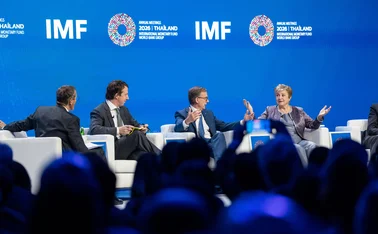
Georgieva: love it, hate it or fear it, AI is here
IMF MD’s ambivalence contrasts with Macklem’s cautious optimism and Anthropic policy chief’s bullishness