The Fed can afford to loosen policy

As (nearly) the world’s most hawkish central bank, the Federal Reserve is right to start monetary loosening, writes Steve Kamin


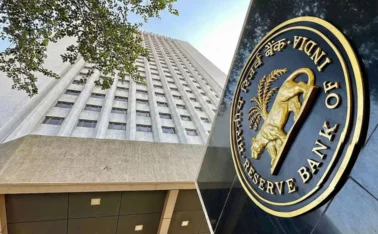
The US Federal Reserve

By the middle of September, financial markets had worked themselves up into a lather as they anticipated the Fed’s first rate cut of this policy cycle. It had indeed been a surprisingly long wait. That’s partly because markets and the Fed had occasionally been wrong-footed by data surprises, such as the uptick in inflation in the first quarter of this year. And it’s partly because the Fed had been exceptionally cautious in taking its foot off the brakes.

When headline CPI inflation hit 9% in mid-2022, even as the unemployment rate had plunged to 3.5%, Fed policy-makers faced a deeply asymmetric challenge: a moderate recession would be viewed as a worthwhile price to pay for getting inflation back under control, but continued high inflation that led to a de-anchoring of inflation expectations and eventual stagflation, à la 1970s, would put Fed chair Jay Powell’s portrait up there with Arthur Burns in the rogue’s gallery of failed central bankers. In consequence, the Fed sought nearly iron-clad assurance that any monetary loosening would not be premature and trigger a reversal of disinflationary progress toward its 2% target.

It finally looked like that assurance was forthcoming. As Powell emphasised in his recent Jackson Hole speech, personal consumption expenditures (PCE) inflation had fallen to 2.5%, wage gains had slowed, and the labour market was now coming into balance. As a result, he all but promised there would be a rate cut at the Federal Open Market Committee’s (FOMC) September meeting, which occurred with a 50-basis point reduction, its first cut since March 2000.

This note should provide further comfort to FOMC participants that their decision to start cutting rates was justified. In brief, measured in terms of the response of the federal funds rate to the run-up in inflation following the pandemic recession, the Fed had become one of the world’s most hawkish central banks and, even after its recent move, it continues to be quite hawkish. By itself, this is not determinative evidence that the Fed should be cutting, as in the first instance it must be guided by the needs of the US economy. But in the fog of uncertainty that surrounds monetary policy-making, the actions of other central banks can provide additional guidance, and the fact that most other central banks in similar situations already have found it expedient to loosen should be welcome news.

From ‘team transitory’ to (nearly) ‘most hawkish’

As figure 1 below indicates, back in March 2022, when the Fed had just started to raise its policy rate, it had fallen behind not only the central banks of Latin America and Eastern Europe, but a couple of advanced economies as well.

This was not because inflation in the US had risen more slowly than in these other economies. Figure 2 below shows the trajectory of core inflation rates around the world. Core inflation in the US had picked up commensurately with those of other countries.

Figure 3 below puts inflation and interest rates together to depict the relative positioning of central banks around the world as of end-March 2022. The x-axis depicts how far core inflation had risen in each country from its average level in 2010–19, a proxy for the inflation target in those countries that did not have one. The y-axis shows how far policy interest rates had risen over their earlier decadal average. As may be seen at that time, with only one rate hike under its belt, the Fed had tightened much less than most other central banks, conditional on the rise in inflation.

But, as indicated in Figure 1, whatever the reasons for staying on ‘team transitory’ too long, the Fed soon made up for lost time. It ended up raising rates at its fastest pace since the Volcker disinflation of the early 1980s and it soon eclipsed most other central banks in its quest to restore price stability.

Figure 4 is similar to Figure 3: the x-axis measures the maximum rise in core inflation experienced by each economy compared to its pre-pandemic decadal average, while the y-axis measures the maximum rise in policy interest rates relative to its earlier average. As before, the trend line represents the average relationship between these two variables across central banks. As may be seen, the US shows the greatest deviation of interest rates from the trend line of all economies except Colombia, Chile and Mexico. That is to say, the Fed exhibited the most aggressive response to the inflation surge of all but those three central banks. And those banks had earlier histories of high inflation, which helps to explain their outperformance in tightening policy. That was not the case for the Fed.

Finally, Figure 5 bring us to the present, comparing the level of policy interest rates (relative to their pre-pandemic average) at the end of August 2024 to their comparable inflation reading. There are two dots for the United States. The black dot indicates its position prior to the Fed’s rate cut on September 18. It shows that owing to aggressive loosening by Chile’s central bank, the Fed became the third most hawkish central bank in our sample, following only Mexico and Colombia. The red dot indicates its position after September 18. It remains among the most hawkish central banks, though it now trails the UK and Canada as well.

US economic strength not the whole story

What accounted for the unusually aggressive response of the Fed to the inflation surge of recent years? Certainly, one of the reasons must be that the US economy held up so much better than other economies in the wake of the Covid-19 pandemic and subsequent surges in inflation and interest rates. But it is very difficult to find a correlation between economic activity and interest rates across the central banks.

Table A presents results of cross-country regressions. The dependent variable is the change in policy interest rates in August 2024 from its 2010–19 average; this is the same measure used in Figure 5 above. The explanatory variables include the most recent core inflation rate and, in the second column, the most recent rate of year-on-year GDP growth relative to its 2010–19 average. 

By including a measure of economic activity, the second equation represents an empirical cross-sectional estimate of a Taylor rule. However, the GDP growth variable is not statistically significant. (Coefficients on other measures of economic activity, including GDP growth by itself, output gaps and unemployment rates, were also statistically insignificant and often had the wrong sign.)

Figure 6 plots the predicted values from that regression (x-axis) against the actual policy interest rates (y-axis). It continues to show that the Fed remains among the more hawkish central banks relative to trend, although as shown by the red dot, this became less pronounced after its recent rate cut.

The ghost of Arthur Burns?

It is unclear why the Fed adopted a monetary policy stance that was more hawkish than that of most other central banks. This is particularly perplexing, considering that the Fed is a highly credible monetary policy-maker and should not have to over-tighten to prove its bona fides. My best explanation is that the mistakes of Arthur Burns and the Fed of the 1970s continue to loom large in the minds of today’s FOMC participants. Central bankers in other countries are also haunted by the ghosts of the 1970s, of course. But it is the mistakes of the Fed during that period that have become so iconic, and today’s Fed has been desperate not to repeat them.

At this point, however, with inflation nearly down to target levels while signs of economic slowing mount, the Fed can afford to follow the lead of most other central banks and start reversing its exceptional monetary tightening. And that, indeed, is what it is doing.

Only users who have a paid subscription or are part of a corporate subscription are able to print or copy content.

To access these options, along with all other subscription benefits, please contact info@centralbanking.com or view our subscription options here: www.centralbanking.com/subscriptions

You are currently unable to copy this content. Please contact info@centralbanking.com to find out more.

Most read articles loading...

You need to sign in to use this feature. If you don’t have a Central Banking account, please register for a trial.

Sign in
You are currently on corporate access.

To use this feature you will need an individual account. If you have one already please sign in.

Sign in.

Alternatively you can request an individual account

.