

Uruguay holds rate for fourth consecutive time
Central bank projects inflation will remain within 3-6% target over coming two years

The Central Bank of Uruguay on August 16 held its policy rate at 8.5% following a slight rise in inflation last month.
Year-on-year inflation stood at 5.45% in July compared with 4.96% in June. However, the bank’s monetary policy committee (MPC) noted in a statement that the July figure remained within its target range of 3–6%.
The MPC added that the average inflation expectations over the coming two years had also fallen to 5.94%. July’s inflation figures, it said, were lower than expected.
It
Only users who have a paid subscription or are part of a corporate subscription are able to print or copy content.
To access these options, along with all other subscription benefits, please contact info@centralbanking.com or view our subscription options here: www.centralbanking.com/subscriptions
You are currently unable to print this content. Please contact info@centralbanking.com to find out more.
You are currently unable to copy this content. Please contact info@centralbanking.com to find out more.
Copyright Infopro Digital Limited. All rights reserved.
As outlined in our terms and conditions, https://www.infopro-digital.com/terms-and-conditions/subscriptions/ (point 2.4), printing is limited to a single copy.
If you would like to purchase additional rights please email info@centralbanking.com
Copyright Infopro Digital Limited. All rights reserved.
You may share this content using our article tools. As outlined in our terms and conditions, https://www.infopro-digital.com/terms-and-conditions/subscriptions/ (clause 2.4), an Authorised User may only make one copy of the materials for their own personal use. You must also comply with the restrictions in clause 2.5.
If you would like to purchase additional rights please email info@centralbanking.com
More on Monetary Policy
Arcontech enhances central banks’ market‑sensitive data publishing with end-to-end encryption
Monetary policy decisions and auction results are safeguarded against cyber security threats.

Lagarde sees slower pass-through after bond sell-off
Higher yields will limit knock-on effects from energy shock, ECB president tells IMF meeting

Warsh: I’ve focused too much on monetary policy
Fed chair vows to pay more attention to supervision, payments systems and consumer affairs

Little evidence of second-round inflation in UK – Bailey
BoE governor says economy more resilient than expected, amid signs of AI investment
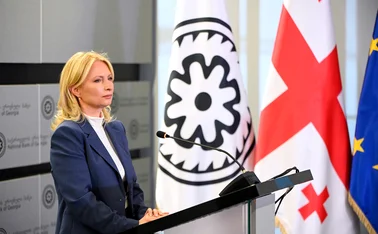
Pre-emptive policy has built credibility, says Georgian governor
Enriched monetary policy toolkit assesses whether shocks are transitory in a volatile world

Fiscal consolidation still possible in France – Moulin
BdF governor says Europe facing twin shock from surge in energy costs and bond yields

Singapore surprises with pause in tightening cycle
MAS says decision made against backdrop of rising inflation, but expects price growth to slow next year

BoK to review use of dot plot it debuted this year – Shin
Governor aims to find forward guidance ‘sweet spot’ and says any review will wait until at least next year