ECB should scale back monetary stimulus after crisis – Weidmann
Knot says central bank should adopt symmetry in the implementation of PEPP purchases
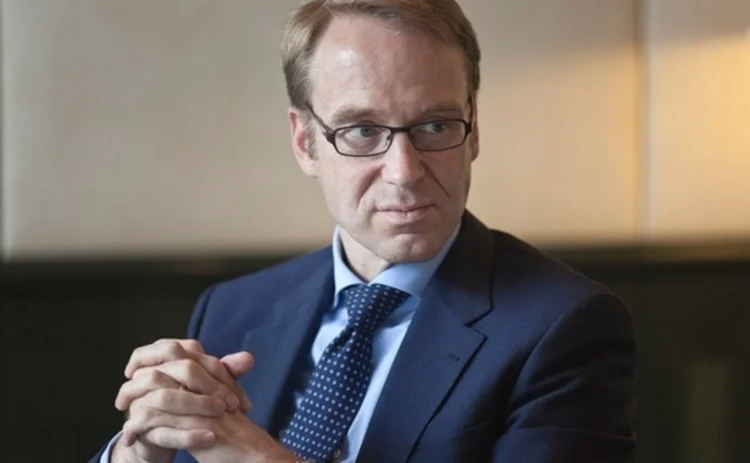
Deutsche Bundesbank president Jens Weidmann stressed the temporary nature of the European Central Bank’s (ECB) monetary stimulus in a speech on September 2.
“After the crisis, the emergency monetary policy measures would have to be scaled back,” said Weidmann. “When deciding on the PEPP [Pandemic Emergency Purchase Programme], it was particularly important to me that it was limited in time and clearly linked to the crisis.”
Because of the sharp increase in sovereign bond spreads between Germany and weaker eurozone economies, such as Italy and Spain, in March, the ECB launched the PEPP with an initial envelope of €750 billion ($888.1 billion). This allowed the central bank to support sovereigns by buying their bonds in the secondary market. As inflation fell further below target, the Governing Council increased the programme to €1.35 trillion, to be purchased until June 2021.
Although Weidmann accepted bond purchases had become a “legitimate and effective monetary policy tool”, he stressed that, “if the inflation outlook requires it, then monetary policy as a whole must be normalised”. In his view, “the risks and side effects of ultra-loose monetary policy can increase over time”.
In a recent interview with Central Banking, the president of the Netherlands Bank, Klaas Knot, emphasised why the PEPP’s effectiveness depends on it being temporary.
“I think it has been well understood that underlying the PEPP there is a sort of triangulation of the capital key being the long-term anchor, flexibility being needed to counter financial fragmentation, and that the two could only coexist because of the temporary nature of the programme – its third dimension,” he said.
“I said in the past that the ‘E’ means ‘emergency’ and, at some point, the emergency will be over. I’m not saying it’s over today, definitely not. But, at some point, it will be.”
Regarding the implementation of PEPP purchases, Knot called on the governing council to be flexible, adapting to incoming data: “The hints that I gave in the past about maybe not exploiting the full amount of the PEPP have to do with the fact that I do believe that there should be symmetry in our policy reaction. If there is a deterioration, we quickly scale up. But if there is a subsequent improvement, then we should also be open-minded to perhaps not spending the whole envelope.”
When deciding on the PEPP, it was particularly important to me that it was limited in time and clearly linked to the crisis
Jens Weidmann, Deutsche Bundesbank
The Dutch official was not against spending the whole envelope. “We’ve made it available, and there should be no doubt that it is available,” he emphasised. “But I also feel that it should not be an obligation. Particularly now that the situation in the markets has stabilised, where monthly flows have become less important than they were in March and April at the height of the crisis.”
Nonetheless, most ECB officials are inclined to spend the whole programme regardless of the economic evolution over the coming months. In fact, some analysts think the governing council will approve a €500 billion increase before the end of the year.
Executive board member Isabel Schnabel clarified the envelope was there to be fully spent, in an interview with news agency Reuters on August 31. “We calibrated the amount based on the June projections, and under that baseline scenario, the envelope will be used in full,” she said. “There could be surprises, both on the upside and the downside, which may mean that we have to reconsider our monetary policy stance. But at the moment, that’s not on the cards.”
Fiscal balance
In his speech, the Bundesbank’s Weidmann warned that the stimulus implemented to tackle the Covid-19 crisis was rapidly increasing public debt levels. In fact, the German central bank now estimates national debt will rise from around 60% of GDP at the start of 2020 to 75% by the end of the year.
“Fiscal policy should not get used to a lax course, nor should it rely on interest rates to remain so low in the long run,” said Weidmann. “That is why it is important to reduce the high debt ratio after the crisis. Because the pandemic is just making us realise how important solid public finances are.”
The German governor was especially critical of a key aspect of the €750 billion Next Generation EU fund, which was approved by heads of government in July. For the first time, the European Commission will raise funds in financial markets on behalf of its member states. Overall, the fund will distribute €390 billion among member states in grants, which will not be repaid, and €360 billion in loans at low interest rates. These funds are scheduled to be repaid by 2058, and Italy and Spain should receive a greater share of transfers to tackle their deeper recessions.
“I consider this aspect to be questionable,” said the Bundesbank president. “A kind of debt illusion could be nurtured here, if EU debt does not show up in national statistics, and its repayment [is] postponed well into the future. Then the impression could arise that debts do not count at European level, or that they are free from annoying budget rules. Financing through contributions from EU states would have been more obvious and transparent here.”
By contrast, Knot welcomed the fund. In his interview with Central Banking, he pointed out monetary policy had been the only game in town for too long following the financial crisis. And this unbalanced policy mix forced central banks to adopt ever-more unconventional policies.
“At this moment, I have no reason whatsoever to criticise fiscal policy,” said Knot. “The fiscal policy contribution is very much welcome, both at the national level, but also the European component. It is important to keep up public investment in economies where borrowing capacity would have been very limited.”
Additionally, he said he valued the fund as a means to help redress some long-term shortcomings in the continent.
“We need more public investment in Europe,” said Knot. “This programme is needed to get some public investment off the ground for which, otherwise, the governments themselves would probably not have found the means to finance.”
Nonetheless, he added that the EU recovery fund would not be able to address on its own the structural problems facing some eurozone economies in southern Europe. In this regard, he deemed it essential that these member states take steps to boost productivity, implementing wide reforms: “The proceeds will fall on barren soil if not accompanied by supply-side reforms, covering labour markets, product markets, ease of doing business and property rights … A combination of nationally legislated reforms and the European fiscal impulse towards more public investment could in my view be a very powerful instrument.”
Only users who have a paid subscription or are part of a corporate subscription are able to print or copy content.
To access these options, along with all other subscription benefits, please contact info@centralbanking.com or view our subscription options here: www.centralbanking.com/subscriptions
You are currently unable to print this content. Please contact info@centralbanking.com to find out more.
You are currently unable to copy this content. Please contact info@centralbanking.com to find out more.
Copyright Infopro Digital Limited. All rights reserved.
As outlined in our terms and conditions, https://www.infopro-digital.com/terms-and-conditions/subscriptions/ (point 2.4), printing is limited to a single copy.
If you would like to purchase additional rights please email info@centralbanking.com
Copyright Infopro Digital Limited. All rights reserved.
You may share this content using our article tools. As outlined in our terms and conditions, https://www.infopro-digital.com/terms-and-conditions/subscriptions/ (clause 2.4), an Authorised User may only make one copy of the materials for their own personal use. You must also comply with the restrictions in clause 2.5.
If you would like to purchase additional rights please email info@centralbanking.com