Target inflation traditionally, G30 tells Fed
Working group says its proposed changes to Fed framework might prevent repeat of 2023 banking crisis
The US Federal Reserve should return to traditional inflation targeting and publish staff forecasts of alternative macroeconomic scenarios, argues a new report from the Group of Thirty.
The report, published yesterday (April 30), was written by a working group headed by former Federal Reserve Bank of New York president William Dudley, and aims to influence this year’s framework review at the US central bank.
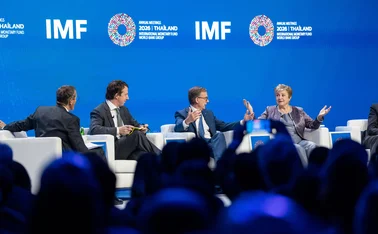
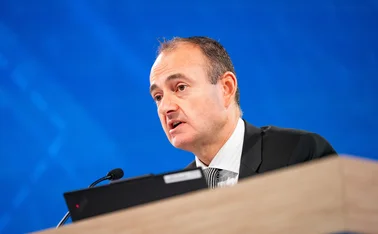
In a discussion yesterday, Dudley argued that a symmetric inflation target would help anchor inflation expectations. He also said the Fed had been “very, very slow to react to what was happening”, pointing to the slow lift-off of rates when the US economy began to overheat from pandemic-related supply chain issues. He attributed this slowness to the framework, thereby illustrating one of the key issues analysts are looking for the Fed to address in its review.
Dudley also recommended that interest on reserve (IOR) balances, not the federal funds rate, should be the main policy rate. He said IOR determined all other short-term rates and that by keeping an eye on it, the Fed would have a good idea of where the federal funds rate was going to be.
He said the Fed should exempt reserves from the supplemental leverage ratio (SLR) because they bore no credit or maturity risks. He said monetary policy should not act in conflict with the SLR.
The working group recommended that monetary policy be integrated with bank supervision and financial stability decisions. Dudley said that under such a framework, the 2023 US banking crisis might not have happened. He argued that the US’s various financial supervisory groups should talk to each other so that decisions by one did not have unintended consequences for another.
Dudley said the biggest issue surrounding the framework review was US president Donald Trump’s attacks on the Fed’s independence. The former New York Fed president said the US central bank could improve its credibility by being forthright and saying how it could do things better.
Dudley said Fed chair Jerome Powell deserved recognition for his good work. He added that he hoped those analysts who believed the Fed would only make minimal changes to its framework because of the severe political pressure it was under would be proved wrong.
“I’m hoping the Federal Reserve is brave,” said Dudley. He added that the mistakes it had made during the post-Covid period were not all about the framework and were driven largely by forecasts. He pointed out that central banks around the world had been similarly slow to act.
The working group’s project adviser was Carolyn Wilkins, senior research scholar at Princeton University. Wilkins said staff forecasts of alternative economic scenarios and the likely responses from policy-makers would help to improve transparency and credibility. Its current communications demonstrated a “particular weakness during periods of high uncertainty”.
The working group also included economist Mohamed El-Erian and five former central bank governors: Israel’s Jacob Frenkel, the UK’s Mervyn King, Mexico’s Guillermo Ortiz, Japan’s Masaaki Shirakawa and China’s Yi Gang.
Dudley said that because of the input from central bankers around the world, the working group’s proposals reflected common international experiences and the lessons from recent challenges.
The working group also called on the Fed to provide “explicit guidance” on how it would handle trade-offs between its employment and inflation objectives. The central bank, it said, should “revert to an employment objective that is consistent with achieving the inflation target”.
Dudley said the current uncertainty over US trade policies provided a case study in how employment and inflation objectives might be at odds. This meant the Fed should provide the markets with guidance on the actions it would be prepared to take under certain scenarios.
Quantitative (and qualitative)
The group also recommended changes to the Fed’s balance sheet programmes.
The Fed, it said, should develop a framework for quantitative easing (QE) and quantitative tightening (QT). This would involve “evaluating all of the Fed’s tools in light of the shift to an excess reserve regime, and more closely integrating monetary policy and regulatory and supervisory policy decision-making”. The working group added that other central banks should consider taking similar steps.
It said the Fed should publish a cost-benefit analysis for large-scale asset purchases. Wilkins admitted that this would be “easier said than done,” but pushed for an exit strategy and a rationale for the Fed’s balance sheet endgame.
She said balance sheet challenges were an issue for central banks all over the world, which needed to distinguish between QE for market functioning and QE to stimulate the economy.
Dudley said the Fed’s QE programme had contributed to the 2023 banking crisis. He said there was no clear exit strategy and pointed to the nearly $230 billion in losses attributed to the programme. Dudley said there was a danger associated with not integrating QT programmes with the Fed’s regulatory policies. He pointed to the supplemental leverage ratio as working at cross purposes with the Fed’s balance sheet operations.
Only users who have a paid subscription or are part of a corporate subscription are able to print or copy content.
To access these options, along with all other subscription benefits, please contact info@centralbanking.com or view our subscription options here: www.centralbanking.com/subscriptions
You are currently unable to print this content. Please contact info@centralbanking.com to find out more.
You are currently unable to copy this content. Please contact info@centralbanking.com to find out more.
Copyright Infopro Digital Limited. All rights reserved.
As outlined in our terms and conditions, https://www.infopro-digital.com/terms-and-conditions/subscriptions/ (point 2.4), printing is limited to a single copy.
If you would like to purchase additional rights please email info@centralbanking.com
Copyright Infopro Digital Limited. All rights reserved.
You may share this content using our article tools. As outlined in our terms and conditions, https://www.infopro-digital.com/terms-and-conditions/subscriptions/ (clause 2.4), an Authorised User may only make one copy of the materials for their own personal use. You must also comply with the restrictions in clause 2.5.
If you would like to purchase additional rights please email info@centralbanking.com