

Kenyan lawmakers criticise Ndung’u reappointment
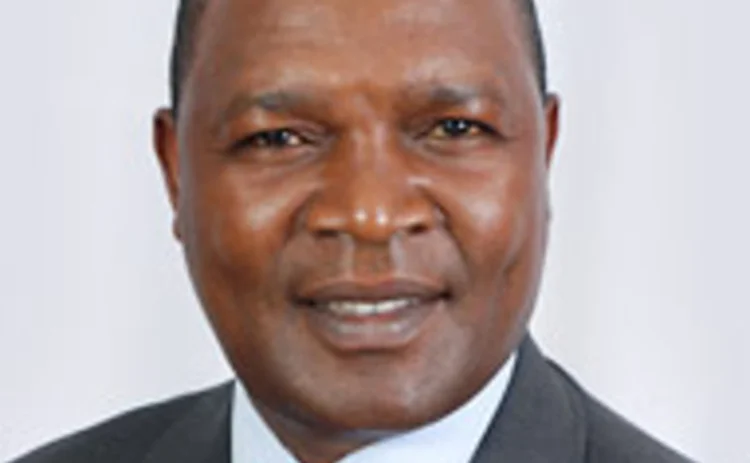
Kenyan lawmakers have challenged the reappointment of Njuguna Ndung'u, the governor of the Central Bank of Kenya, local media sources have reported.
Daily Nation, a Kenyan newspaper, on Tuesday said that members of parliament have labelled Ndung'u's reappointment last week "unconstitutional". The paper reported that Charles Kilonzo, an MP, pointed out that the central bank's board of directors, which is supposed to review the performance of the governor, had not met in more than a year. "If the
Only users who have a paid subscription or are part of a corporate subscription are able to print or copy content.
To access these options, along with all other subscription benefits, please contact info@centralbanking.com or view our subscription options here: www.centralbanking.com/subscriptions
You are currently unable to print this content. Please contact info@centralbanking.com to find out more.
You are currently unable to copy this content. Please contact info@centralbanking.com to find out more.
Copyright Infopro Digital Limited. All rights reserved.
As outlined in our terms and conditions, https://www.infopro-digital.com/terms-and-conditions/subscriptions/ (point 2.4), printing is limited to a single copy.
If you would like to purchase additional rights please email info@centralbanking.com
Copyright Infopro Digital Limited. All rights reserved.
You may share this content using our article tools. As outlined in our terms and conditions, https://www.infopro-digital.com/terms-and-conditions/subscriptions/ (clause 2.4), an Authorised User may only make one copy of the materials for their own personal use. You must also comply with the restrictions in clause 2.5.
If you would like to purchase additional rights please email info@centralbanking.com
More on Governance

Trump sets up committee to investigate Cook
Courts had previously ruled US president had not followed due process in trying to fire Fed governor

BCRA challenges claim of $1bn loss on gold hedges
Central bank says derivatives transactions in 2025 reflected routine hedging operations

BIS’s Hernández de Cos on AI, non-bank risk and tokenisation
General manager talks about how the BIS is navigating a complex global environment
Pacific series: Climate is top issue for Fiji’s governor Ariff Ali
Head of central bank speaks about climate, inclusion, modernisation and vulnerability ahead of his likely retirement next year, following 30 years at institution

Populism casts long shadow over central bank policy – NBER paper
Countries with history of monetary financing make extra effort to show anti-inflationary credentials

Deregulation weakens resilience, does not spur lending, says Buch
ECB supervisory board chair calls for more ‘watchers’ of bank regulators

Ukraine’s ESG lessons from a war zone
NBU governing council member Olena Shcherbakova speaks about how environmental, social and governance rules can be adapted for dual-use and defence requirements

The Fed enters a new epoch
Chair Kevin Warsh takes his first steps to transform the US central bank