

Bank of Israel, fin min fall out over new law
Stanley Fischer, the governor, said on Sunday that the new law would "contribute to the economic and financial strength of the state of Israel." Fischer also said that he would block attempts from the finance ministry to control central bankers' pay as this would give the authority "a tool to use against the central bank every time
Only users who have a paid subscription or are part of a corporate subscription are able to print or copy content.
To access these options, along with all other subscription benefits, please contact info@centralbanking.com or view our subscription options here: www.centralbanking.com/subscriptions
You are currently unable to print this content. Please contact info@centralbanking.com to find out more.
You are currently unable to copy this content. Please contact info@centralbanking.com to find out more.
Copyright Infopro Digital Limited. All rights reserved.
As outlined in our terms and conditions, https://www.infopro-digital.com/terms-and-conditions/subscriptions/ (point 2.4), printing is limited to a single copy.
If you would like to purchase additional rights please email info@centralbanking.com
Copyright Infopro Digital Limited. All rights reserved.
You may share this content using our article tools. As outlined in our terms and conditions, https://www.infopro-digital.com/terms-and-conditions/subscriptions/ (clause 2.4), an Authorised User may only make one copy of the materials for their own personal use. You must also comply with the restrictions in clause 2.5.
If you would like to purchase additional rights please email info@centralbanking.com
More on Governance
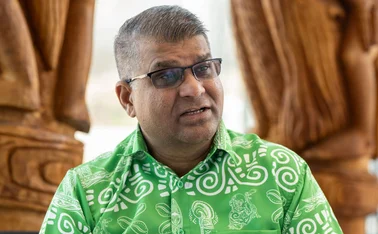
Pacific series: Climate is top issue for Fiji’s governor Ariff Ali
Head of central bank speaks about climate, inclusion, modernisation and vulnerability ahead of his likely retirement next year, following 30 years at institution

Populism casts long shadow over central bank policy – NBER paper
Countries with history of monetary financing make extra effort to show anti-inflationary credentials

Deregulation weakens resilience, does not spur lending, says Buch
ECB supervisory board chair calls for more ‘watchers’ of bank regulators

Ukraine’s ESG lessons from a war zone
NBU governing council member Olena Shcherbakova speaks about how environmental, social and governance rules can be adapted for dual-use and defence requirements

The Fed enters a new epoch
Chair Kevin Warsh takes his first steps to transform the US central bank

Tolerating overshooting inflation helps decarbonisation – study
Policy committed to stabilising output is best suited to green transition, say Bundesbank economists

ECB funds biodiversity loss – NGO report
Reclaim Finance urges central bank to stop purchasing bonds issued by fossil fuel firms

Populism poses ‘serious challenge’ to central banks – Bailey
Monetary authorities need to respond to ‘growing scepticism’, BoE governor says