

Lifetime achievement award: Mervyn King

Mervyn King has had a profound impact on central banking, financial oversight and economics during his decades-long career. He played a critical role in helping to secure monetary stability in the UK after years of poor performance, including the development of significant technical capabilities at the Bank of England during his 22 years at the institution. He has long championed the role of independent central banks pursuing narrow mandates. As governor from 2003 to 2013, he led the UK central bank’s responses to both the global financial crisis and the eurozone sovereign debt and banking crisis. King cut interest rates to their lower bound, secured swap lines and engaged in short-term asset purchases as the crisis took hold in 2008, while protecting the BoE against losses.
He has also consistently called for fiscal control, and more prudent behaviour and provisions to guard against moral hazard in the financial sector, pushing for simpler banking rules as well as better pre-planning to deal with future financial stress events. “Mervyn King has been an outstanding figure in the world of central banking,” says Otmar Issing, former chief economist and architect of the monetary operating framework at the European Central Bank. “He has had a strong influence… be it at the International Monetary Fund or the Bank for International Settlements or in academic circles.”
King has long argued that the future is ‘unknowable’, rather than just risky. This means it is dangerous to place too much confidence when trying to assign mathematical probabilities to economic decisions. Despite pioneering computerised economic approaches, King has cautioned the economic profession, central bankers and financial market professionals against over-relying on “spurious precision” provided by models that ignore real-world, unpredictable shocks. Consistent failure to do so, may help explain why financial market practitioners still appear to be challenged to price in the effects of events such as the imposition of unilateral tariffs by the US last year or the repercussions from the latest US-Israeli attacks on Iran.
The early years

Mervyn Allister King – a keen tennis player and cricketer, who has served as a director of the All-England Lawn Tennis & Croquet Club and president of Marylebone Cricket Club for 2024/25 – was born in Buckinghamshire, England, in 1948. He attended Wolverhampton Grammar School and became a life-long supporter of the Aston Villa football team, before reading economics at King’s College, Cambridge (where he earned a first), and then as a Kennedy scholar, at Harvard University, where Martin Feldstein was his adviser, mentor and, later, close friend.
In 1972, King was elected a fellow of St John’s College, Cambridge, where he worked as a researcher on the Cambridge Growth Project, a programme set up by Alan Brown and Nobel prize-winner Richard Stone to build a multi-sectoral computer model of the British economy. He moved on to teach at the University of Birmingham, Harvard and the Massachusetts Institute of Technology, where he worked nearby to Ben Bernanke, the future chair of the US Federal Reserve. Bernanke said the pair established a relationship back then “talking about policy issues” – even if they did not always agree – which, ultimately, would serve them and their countries well as they sought to manage fallout from the global financial crisis in 2008. “It was good because when we were working together during the crisis we had the basis of a personal relationship, which was useful,” said Bernanke in 2014.
King’s economic thinking was shaped by a wide range of influences, his intellectual curiosity encouraged by mentors such as Feldstein, and by his trans-Atlantic education. At Cambridge University he learned the foundations of Keynesian economics and the Neo-Ricardian school. At Harvard, he was exposed to econometrics and the neoclassical school. Friedrich Hayek was another key influence.
Ultimately, his thinking developed to incorporate ‘radical uncertainty’, a condition in which it is impossible to identify all potential future outcomes or assign meaningful probabilities to them. The concept stems from work by the University of Chicago’s Frank Knight, who in the 1920s distinguished between risk – where probabilities are knowable – and uncertainty – where they are not. Leading economists such as Milton Friedman rejected Knight’s distinction in the latter half of the 20th century, and King argues this was a mistake that led many economists and financiers astray, setting the stage for the global financial crisis.
Early on, however, King was a specialist in fiscal economics, having written a book on The British Tax System in 1978, jointly with his lifelong friend and co-author John Kay. He would repeatedly warn that fiscal spending – or monetary loosening – was not a panacea to bolstering lacklustre economic growth.
Mervyn King has been an outstanding figure in the world of central banking. He has had a strong influence… be it at the International Monetary Fund or the Bank for International Settlements or in academic circles
Otmar Issing

King moved from Birmingham University to the London School of Economics to become a professor of economics 1985, where he co-founded the Financial Markets Group with Charles Goodhart in 1987. “I had just myself come to the LSE from the Bank of England, and we very quickly joined forces to obtain funding to establish the FMG. It was a good time to do this because many foreign banks had just arrived in London after the ‘Big Bang’ and were keen to show their allegiance to the UK by supporting local initiatives,” Goodhart tells Central Banking.
The FMG examines issues related to the stability and efficiency of the financial system, how it supports the real economy and the policy measures that could generate improvements in these areas. Goodhart says King, along with David Webb, “took over the main direction and running of the group and rapidly made it into a great success”. “He was then, and I believe remains, a perfectionist,” says Goodhart, adding that this meant paper co-authorship could sometimes be a challenge for King’s peers.
To the Bank of England

King took on a role at the Bank of England in 1990, as a non-executive director, and was appointed chief economist in 1991. His research helped to provide the framework for the UK central bank’s new cornerstone for UK monetary policy. “He was an intellectual leader in propagating the new concept of inflation targeting,” says Issing, who was also a board member at Deutsche Bundesbank from 1990 to 1998. “He also played a key role in popularising the approach in the central banking community more broadly.”
King was an inaugural member of UK central bank’s nine-member Monetary Policy Committee, which was set up to make interest rate decisions independent of political influence. This came after the UK chancellor of the exchequer, Gordon Brown, granted the Bank of England operational independence on May 6, 1997. “Already as chief economist he had a strong influence,” says Issing.
“King not only organised the introduction of the MPC, he also managed the process to bring the expertise of its internal and external members to prepare the monetary policy decisions. It was anything but easy to guide this group of special characters by the force of his outstanding theoretical and empirical knowledge,” says Issing.
Goodhart says this was when he renewed his “acquaintance and friendship” with King, having been appointed as an external member of the MPC. “As always, Mervyn’s intelligence and command of the relevant issues was outstanding, but I do remember helping him to smooth over an issue about the in-house support that the BoE could and should give to the other externals.”
King pushed through far greater levels of transparency at the UK central bank, transforming its quarterly bulletins into highly anticipated inflation reports. These forward-looking, legally mandated reports helped to justify policy decisions against a set inflation target. He also introduced ‘fan charts’ to show probability distributions for forecasts and focused on accountability, using the reports to explain how MPC decisions would meet the BoE’s target.

King’s economic thinking was shaped by a wide range of influences, his intellectual curiosity encouraged by mentors such as Feldstein, and by his trans-Atlantic education
In 1998, King took over duties as deputy governor of the bank and became a member of the Group of Thirty. He continued to recruit some of the best economists from around the world to work at the BoE. Its research centre grew in terms of its staffing and their academic weight, helping the UK central bank to remain at the cutting edge of monetary theory – although the focus caused some disgruntlement among non-economist staff.
Overall, the period heralded a remarkable transformation for the UK, which had had a poor track record with both inflation and growth that culminated in the withdrawal of sterling from the European Exchange Rate Mechanism in 1992. Year-on-year inflation from 1997 tracked close to the central bank’s 2.5% retail price index, excluding mortgage interest (RPIX) target. The UK was no longer the lagging exception among its G7 peers. “To my knowledge – he never neglected the role of money,” says Issing, pointing to King’s 2002 paper, No money, no inflation.
Leading the ‘Old Lady’
“Mervyn then became the obvious and outstanding candidate to become the next governor, following on from Eddie George, a commanding figure,” says Goodhart. King succeeded George in 2003 despite his well-known hesitation about taking Britain into the European Monetary Union and his lack of financial sector experience.
In December that year, the government changed the BoE’s mandate, shifting the target from a 2.5% RPIX to 2% consumer price index. Rising oil and gas prices in 2004 and 2005 pressured the new CPI target, requiring the BoE to anchor inflation expectations to prevent temporary shocks from becoming permanent. King often tended more towards voting for tighter monetary policy than some of his colleagues. Most notably, he opposed the interest cut by the MPC in August 2005 and was in the MPC minority voting in favour of higher rates in June 2007. This willingness to place himself, as governor, in a minority on interest rate policy was unusual among peer central bankers. But shocks overall were limited during the ‘great moderation’.
The good times fizzle out
By 2007, King had publicly voiced his concerns about the impact of low interest rates, loose credit standards and the build-up of financial leverage and debt. In June 2007, King told attendees at the annual Mansion House dinner to be “cautious about how much you borrow” amid the burgeoning growth of the securitisation market. “Be cautious about how much you lend, especially when you know rather little about the activities of the borrower,” he said. “It may say champagne – ‘AAA’ – on the label of an increasing number of structured credit instruments. But by the time investors get to what’s left in the bottle, it could taste rather flat.”
The BoE governor also spoke that year about how high savings rates in East Asia and oil-producing nations had resulted in a structural decline in real interest rates in western markets, with yields on inflation-protected UK government bonds declining from 4% in the 1990s to 1% in 2007, as the so-called ‘glut’ of savers sought out international assets. This encouraged borrowing and spending, and reduced savings in the UK and the US, he asserted. It also sparked a frenzied ‘search for yield’ among investors more generally. The result was demand for innovative, riskier financial products, including asset-based securities based on high-risk mortgage debt and even tranches of collateralised debt obligations (CDOs) offered in synthetic forms based on model outputs rather than bundles of actual securities.
Matters started to come to a head on August 9, when BNP Paribas revealed some of its investment funds could no longer value their exposures to US sub-prime mortgage loans, prompting a sharp reappraisal of risks. Asset prices fell and markets in some instruments closed, sending a chill through banking systems around the world. Those banks that had relied on selling securitised loans could no longer sell them, and those with cash increasingly hoarded it, fearful of the exposures of their peers, resulting in a breakdown in interbank lending.
‘The Rock’ and a hard place
UK bank, Northern Rock, was particularly prone. The mortgage-lender had expanded aggressively and relied on short-term money markets, rather than traditional deposits, for more than 75% of its funding. As money market liquidity dried up, it was only able to borrow at ever-shorter maturities. The BoE lent in the money markets to banks against high quality collateral, such as government debt, to bring overnight borrowing rates into line with the bank rate. But King was reluctant to lend money to banks in exchange for illiquid assets, unless there was a high ‘penalty rate’, due to concerns about ‘moral hazard’– as such actions encourage the very risk-taking that caused the problems in the first place.
Soon followed perhaps was the most controversial episode of King’s career, as retail depositors started queueing outside Northern Rock branches in September 2007, heralding the first bank run in the UK for some 140 years. Some blamed King’s refusal to extend cheap liquidity to Northern Rock and his apparent subsequent lack of strong support for a government bail-out of the stricken bank as a factor in damaging the credibility of the banking sector.
King defended his decision for charging Northern Rock a penalty rate for emergency funds, arguing that it is not the job of central banks to bail out banks for taking excessive risks. He also stressed that the subsequent decision not to support a private takeover of Northern Rock by Lloyds TSB was made by then-chancellor Alistair Darling. The head of the now-defunct Financial Services Authority, Hector Sants, had claimed that if King had followed his recommendation to provide a liquidity guarantee to Lloyds TSB to buy Northern Rock in September 2007, the crisis would have been abated. But King insisted that such a backstop needed to be provided by the government rather than the central bank. King has also said he favoured a “covert’” bailout, but legal constraints forced a public announcement that triggered the run. He later pressed for better legal frameworks to allow for orderly bank failures.
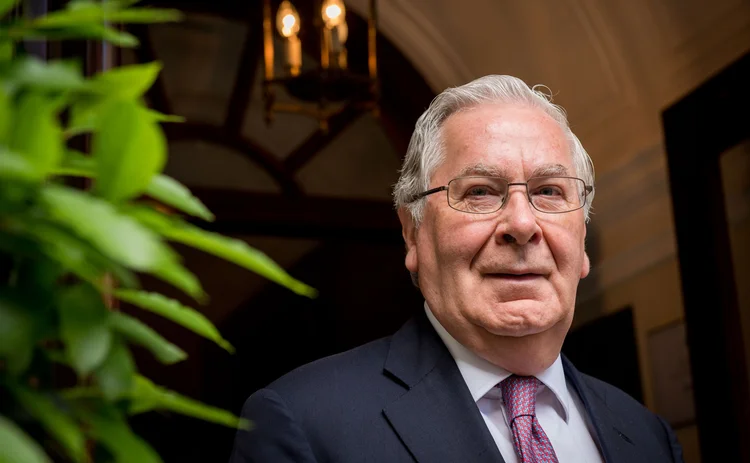
King took on a role at the Bank of England in 1990, as a non-executive director, and was appointed chief economist in 1991. His research helped to provide the framework for the UK central bank’s new cornerstone for UK monetary policy
Bank for International Settlements chief economist Hyun Shin subsequently noted that the BoE did provide substantial emergency funding and tried hard to rescue the Northern Rock. He noted that Northern Rock’s problems emerged well before the bank run – it was the wholesale funding problem that set the collapse in motion. And his research shows that funding from the BoE made up nearly 28% of Northern Rock’s liabilities in December 2007. But the credit crisis, the lack of a government bailout and limited resolution tools made a rescue very difficult.
King said a key lesson from Northern Rock was that “liquidity should be central to the regulation of banks” and this was absent as bank rules had largely focused on ever-more complex capital standards under Basel rules. He suggested that smaller banks with a reliance on wholesale funding should also be encouraged to put in place insurance and there was a need to develop a mechanism to pre-emptively intervene when a bank is in trouble while separating out the insured deposits from the rest of the bank’s balance sheet.
King also called for deposit insurance protection for retail depositors to be raised. Deposits subsequently were fully guaranteed up to a limit of £85,000 (rising to £120,000 at the end of 2025) through the Financial Services Compensation Scheme and resolution frameworks were put in place with the intention that banks should be able to fail in an orderly manner without recourse to taxpayer’s money.
The global financial crisis
The chaotic collapse of Northern Rock was mirrored a year later when Lehman Brothers – a firm heavily involved in selling collateralised debt obligations and highly exposed to the US sub-prime mortgage crisis – reported multi-billion-dollar losses and was in desperate need of financial support. While its peer, Bear Stearns, had been bailed out in March, no emergency buyer could be found for Lehman Brothers, after Barclays walked away from a last-minute deal and the Federal Reserve opted not to step in.

Lehman’s collapse sparked a cascading series of events that pushed the global financial system close to collapse. Bank of America stepped in to buy Merrill Lynch, which was heavily involved in selling complex financial products, saving it from bankruptcy. Then the US government was forced to provide an $85 billion credit facility to support American International Group (AIG), which had insured banks against credit losses by underwriting huge nationals of credit default swaps, and was deemed too big and too interconnected to fail. The seizure of global funding markets was also a problem in the UK, with two systemically important banks that had grown rapidly via acquisition, HBOS and RBS, being particularly vulnerable.
The MPC led by King cut interest rates from 5.5% in late 2007 to 2% by December 2008, continuing to 0.5% in the following months. The BoE made the cuts despite a rise in consumer price inflation (over 5% in September 2008), caused by high commodity prices and a depreciation in the value of sterling. This time, the BoE also provided significant liquidity to the banking system to counteract the drying up of interbank lending. In his book, The courage to act, Bernanke noted that he had said: “‘There are no atheists in foxholes or idealogues in a financial crisis’. Mervyn had joined his fellow central bankers in the foxhole.”
The BoE’s emergency liquidity provision followed the creation of a special liquidity scheme in April 2008, enabling banks to swap their illiquid mortgage-backed assets for Treasury bills. But by October 6 and 7, even overnight funding started to dry up, and the amount of collateral pledged at the BoE was worth more than the equity capital of the UK’s banks. As a result, on October 8, the Treasury unveiled a £50 billion recapitalisation package for the UK banking system, supported by the BoE and FSA, which ultimately led to the government becoming a major shareholder in RBS and Lloyds (which acquired HBOS in January 2009). While events were triggered by the collapse of Lehman Brothers, King said: “It would be a mistake, however, to think that had Lehman Brothers not failed, a crisis would have been averted. The underlying cause of inadequate capital would eventually have provoked a crisis of one kind or another somewhere else.”
The global crisis also required a global response. King negotiated with the Federal Reserve to establish and expand reciprocal currency swap lines that allowed the Bank of England to borrow US dollars from the Fed and lend them to UK-based banks facing funding issues related to their dollar-denominated assets. After a meeting of finance ministers and central bank governors in Washington, DC, on October 10, the G7 agreed to a five-point ‘plan of action’ to stabilise financial markets and restore the flow of credit to support economic growth. King argued that the unprecedented scale of central bank liquidity support, including the swap lines, was crucial to staving off a global depression. But he stressed that the goal was not to save banks but rather to protect the broader economy from bank failures.
In 2009, the BoE’s MPC announced £75 billion of asset purchases, financed by the issuance of central bank reserves. The aim of this quantitative easing was to provide further monetary stimulus to boost economic activity and improve liquidity. King, meanwhile, cautioned against excessive deficit financing as a tool for countering economic contraction. Indeed, some believe he risked his career in March 2009 by publicly warning the British government against a second fiscal stimulus.
The then-BoE governor added that dealing with the problems of October 2008 was easier than those of 2007, because the “solution was more obvious”. Reflecting on the period in 2014, King described it as “exciting” and “fascinating”. “It was the sort of problem we had trained to deal with over many years,” he said.
Lessons learned
Since the crisis, international co-operation increased dramatically. Founded in 2009, the Financial Stability Board co-ordinated with its G-20 members committing to implement its standards at national level. British banks were ring-fenced to separate retail deposit and domestic payments from their investment entities and banks prepared ‘living wills’ that were designed to be followed to allow them to fail without recourse to public funds.
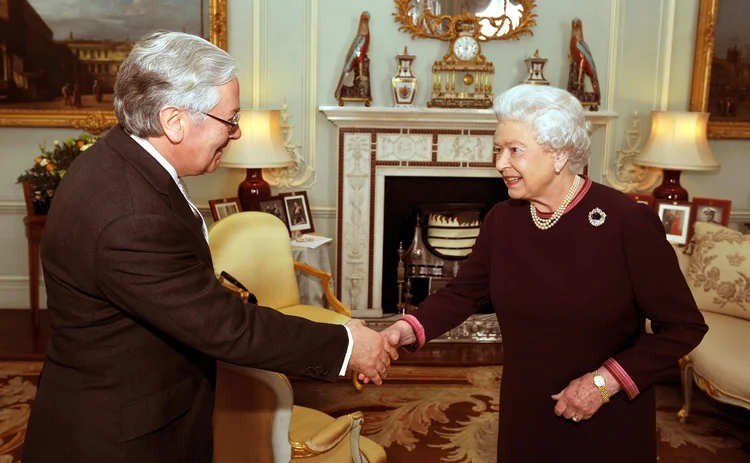
King retired from office as governor in June 2013, being succeeded by FSB head, Mark Carney. Named a life peer in July 2013, Lord King of Lothbury entered the House of Lords as a crossbencher. From 2014 until 2022, he was also professor of economics and law, a joint chair at New York University’s Stern School of Business and School of Law. He was named Companion of the Most Noble Order of the Garter – the UK’s highest honour – by Queen Elizabeth II on April 23, 2014.
An end of alchemy?
Instead of writing his memoirs, as did others embroiled in the global financial crisis, King’s opus, The end of alchemy: money, banking and the future of the global economy, focused on economic ideas. The book was written as a response to a comment made to King by then-governor of the People’s Bank of China, Zhou Xiaochuan, saying that he didn’t think the West had quite got the hang of money and banking yet.
It became a bestseller and reinforced King’s concepts of the need to have a more secure banking sector as well as pointing to the inadequacies of standard models, which not only said little about the importance of money and banks, but also failed to consider issues related to disequilibrium, radical uncertainty, the prisoner’s dilemma and trust.
King warned about rising debt, including on bank balance sheets, the disequilibrium in spending and savings within and between countries, and the diminishing return of policies employed by central banks in the 2010s. King also stressed that the 2008 crisis was the fault of the financial system, not individual bankers. “The crisis was a failure of a system, and the ideas that underpinned it, not of individual policy-makers or bankers, incompetent and greedy though some of them undoubtedly were,” he wrote.
He advocated for simper mechanisms for bank liquidity and capital rules, saying banks needed to act as conservative, low-risk and productive lenders. He called for the pre-positioning of collateral during non-crisis periods that would be eligible for central bank liquidity operations, if needed during an emergency. Effectively, this would involve the central bank valuing the assets of banks and then permitting banks to issue short-term liabilities, but only to the point that the central bank was willing to take the assets as collateral after a haircut on the collateral. And all of this needed to be done upfront.
“Once you’ve done that, you don’t need the hundreds of thousands of pages of regulations,” King said in an interview in 2023. “The ex ante framework I have suggested would have prevented Silicon Valley Bank from expanding their deposit book so quickly because the regulators would have imposed haircuts on the value of the bank’s assets. And the uninsured depositors would have known that the bank had access to a contingent credit line from the Fed.”
Fragile expectation theory
King has also stated that prevalent theories of inflation expectations are “too fragile” to serve as an anchor for inflation and central banks risk being led astray. A satisfactory theory of inflation cannot take the form that “inflation will remain low because we say it will”, King said in 2021.
“The reason why I like and respect Mervyn King is for his intellectual honesty and lucidity,” says former Bank of Japan governor, Masaaki Shirakawa. “A case in point is his criticism toward mainstream macroeconomics, which represents the intellectual underpinnings of monetary policy of advanced economies’ central banks.”
King has said current central bank models have two major flaws, which undermine their usefulness in a world of radical uncertainty. First, they assume complete markets, implying no particular role for money – although BIS efforts have resulted in some changes in this area. Second, they treat the economy as “stationary”. John Maynard Keynes recognised this danger, King said. “Models are neither right nor wrong, but helpful or unhelpful,” King said during his 2019 Per Jacobsson Lecture.
King has also argued central banks should stop using forward guidance, a policy conducted by both the BoE and Fed in 2013 that he described as “unwise” given that the future is so uncertain. While forward guidance was introduced to provide additional information about the likely path of future interest rates, it soon became “an attempt to predict the future path of interest rates” and this has not tended to be “a happy experience”. “To retain credibility, it is important that central banks do not claim to know more than they, in fact, do,” King said in The end of alchemy.
In a similar vein, he warned against the use of average inflation targeting, which the US Federal Reserve adopted in August 2020 and dropped in 2025.
The reason why I like and respect Mervyn King is for his intellectual honesty and lucidity. A case in point is his criticism toward mainstream macroeconomics, which represents the intellectual underpinnings of monetary policy of advanced economies’ central banks
Masaaki Shirakawa

Growth and inflation
King has also urged central banks to drop “the pretence that money has nothing to do with inflation” and “the belief that monetary stimulus is an appropriate response to all economic problems”. Persistent calls for ‘monetary activism’ – or even fiscal stimulus – to address sluggish economic growth are based on a fundamentally flawed theory, said King.
He criticised central banks for using monetary easing to tackle market stress in March 2020 and then keeping the stimulus in place once stresses eased. Despite implementing QE himself in 2009, he described it as a “terrible mistake” in the context of the Covid-19 pandemic. He also said that global central banks can be trapped in a “prisoner’s dilemma”, whereby they are restricted from raising interest rates sufficiently in case they derail economic recovery.
King has said if the world wanted to escape a period he branded “the great stagnation”, there was a need to go “well beyond” monetary and fiscal policies to address demand-led secular stagnation, which included “exchange rates, supply-side reforms and measures to correct unsustainable national savings rates”.
Too broad a mandate
King has also repeatedly lamented the BoE’s mandate becoming too broad, so distracting policy-makers from carrying out their core functions. At a ‘BoE watchers’ conference in 2025, King mentioned how the UK government “slipped into an annual round of writing a remit letter” for the UK central bank after 2013. “It subtly changes all the various things the bank was supposed to do. I think that’s a big mistake,” King said, including promoting monetary activism by requiring the MPC to consider the trade-offs between inflation and output when making decisions.
Though he is not in favour of a wider remit, King said he was glad that banking supervision returned to the BoE’s umbrella in 2013 with the establishment of the Prudential Regulation Authority. Having the supervisory power was important to support the BoE’s role as a lender of last resort. King claims that the then-FSA had failed to provide the BoE with information on major banks’ liquidity positions during the global financial crisis. This complicated the emergency lending process. Nonetheless, King is concerned the current supervisory efforts have gone further than necessary. “Much of the work in supervision that goes on is not really directly relevant to the lender of last resort.”
King described the bank’s venture into the climate area, as formally requested in 2021 but dropped subsequently, as a “very big mistake”. He argued that although climate change was an important issue, the central bank was not the appropriate institution from which to seek solutions. “The bank can’t influence climate change,” he said. “There are many uncertainties that affect the position of banks that will materialise probably well before the impact of climate change.”
A ‘holy trinity’ for central banks, in King’s view, would be to develop and explain a narrative about the changing structure of the economy, create a process where the prevailing narrative can be challenged and operate a ‘heuristic’ for setting policy “that is robust with respect to the many surprises in the economic climate”. “Above all, keep it simple,” he said in 2022. “An inflation target was a simpler and more robust heuristic than an intermediate target. And a good narrative will take on board the risks that unsustainable developments, such as the rise in leverage and fall in real interest rates before the financial crisis, pose to the economy in the medium term.”
The Central Banking Awards 2026 were written by Christopher Jeffery, Daniel Hinge, Daniel Blackburn, Joasia Popowicz, Levente Koroes, Thomas Chow, Jono Thomson, Riley Steward and Blake Evans-Pritchard.
Only users who have a paid subscription or are part of a corporate subscription are able to print or copy content.
To access these options, along with all other subscription benefits, please contact info@centralbanking.com or view our subscription options here: www.centralbanking.com/subscriptions
You are currently unable to print this content. Please contact info@centralbanking.com to find out more.
You are currently unable to copy this content. Please contact info@centralbanking.com to find out more.
Copyright Infopro Digital Limited. All rights reserved.
As outlined in our terms and conditions, https://www.infopro-digital.com/terms-and-conditions/subscriptions/ (point 2.4), printing is limited to a single copy.
If you would like to purchase additional rights please email info@centralbanking.com
Copyright Infopro Digital Limited. All rights reserved.
You may share this content using our article tools. As outlined in our terms and conditions, https://www.infopro-digital.com/terms-and-conditions/subscriptions/ (clause 2.4), an Authorised User may only make one copy of the materials for their own personal use. You must also comply with the restrictions in clause 2.5.
If you would like to purchase additional rights please email info@centralbanking.com
More on Awards

Central Banking Awards 2026 ceremony honours foremost in field
‘Oscars of central banking’ recognise outstanding contributions to the community
Central Banking Awards 2026: the winners in full
Awards recognise extraordinary achievements in another challenging year for central banks
Digital currency initiative: eCurrency
eCurrency translates cultural context into CBDC design, informed by global experience

Currency manager: Central Bank of Curaçao and Sint Maarten
The central bank overcame a nine-year hiatus to launch the Caribbean guilder

Financial market infrastructure – retail: ACI Worldwide
The payments company’s digital central infrastructure has played a key role in Colombia’s Bre-B roll-out as well as elsewhere

Financial services: Citi
The US bank has striven to provide clients with high-level advice as well as service breadth, technical expertise and execution

Digital transformation award: Bank of Mexico
Banxico has replaced critical systems with ‘living’, adaptive, decentralised architecture

Financial markets infrastructure services – wholesale: Bloomberg
Tech firm helped Nigeria and Sri Lanka’s central banks to build essential FX market infrastructure, and Portugal and Ukraine’s treasuries to optimise debt auctions