

BoE needs ‘better handle’ on control of UK currency
Lawmakers highlight the UK’s disjointed cash management, which could put consumers at risk, they say
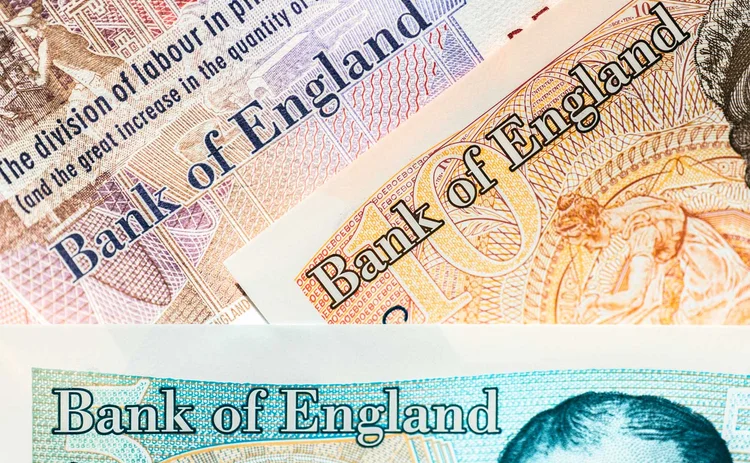
A UK parliamentary committee says the Bank of England needs to get a “better handle” on its cash management on account of billions of ‘missing’ banknotes.
A report published by the Public Accounts Committee on December 4 claims the BoE cannot provide “convincing reasons” for why demand for banknotes keeps increasing. Nor does it know precisely what its current stock of banknotes is being used for, the public spending watchdog says.
The BoE estimates 20–24% of issued banknotes are used or held for cash transactions. This leaves about £50 billion ($66.3 billion) of issued banknotes being used overseas for transactions or savings, held in the UK as unreported savings, or for use in the ‘shadow economy’.
“Depending where it is and what it’s being used for, that amount of money could have material implications for public policy and the public purse,” said Meg Hillier, chair of the PAC. “The [BoE] needs to get a better handle on the national currency it controls.”
In a statement, the BoE dismissed the suggestion that any banknotes were ‘missing’: “It is the responsibility of the Bank of England to meet public demand for banknotes. The bank has always met that demand and will continue to do so. Members of the public do not have to explain to the bank why they wish to hold banknotes. This means that banknotes are not missing.”
Entitled The production and distribution of cash, the report also concludes that current oversight of the UK’s cash system is “fragmented”. It warns there is a risk that responsibility for taking action to fix the system “falls between the cracks”.
“Public bodies… don’t appear to have grasped what the full impact lack of access can have on communities,” the report says. “There are clear dangers of hardship for some individuals and groups if we move precipitously towards a cashless society.”
Demand for banknotes in the UK continues to rise, despite cash usage falling significantly over the past decade. There are currently 3.9 billion banknotes in circulation, worth around £71 billion; in 2014, the value of banknotes in circulation was £56.2 billion.
‘Missing’ billions
During the Covid-19 pandemic there was a significant increase in the value of notes in circulation; meanwhile, banknote usage is decreasing, which suggests cash’s use as a store of value has increased.
Central banks keep a minimum stock of notes to ensure adequate cash supply to the economy. In the UK, the BoE has a minimum guidance level of £15.6 billion; at the end of July 2020, it held contingency stocks with a value of £30.4 billion.
“We do not understand the bank’s rationale for holding such high levels of stocks,” the report says.
The BoE responded that it is “not unusual” to hold large stocks of notes, as there may be long lags between print runs. But it accepted it needs to improve the transparency with which it takes decisions on printing notes.
The PAC is also asking the BoE to work more closely with the government’s Revenue and Customs department to better understand demand for banknotes – especially for those notes which are “missing”.
“The [BoE] does not have any real understanding of what these notes are being used for, though says that it is a trend being seen with other major currencies,” the report says.
Disjointed risks
One of the core concerns of the report is that the oversight, production and distribution of the UK’s banknotes and coins is “unclear” and “fragmented”.
The Treasury, Financial Conduct Authority, Payment Systems Regulator and BoE all currently play a role in the cash lifecycle.
However, no one of the five organisations is in in charge of making the cash system work effectively in the UK, according to the report. While there is overlap on some areas of the cash cycle, there are aspects where no organisation is responsible – this includes monitoring how well the cash system performs overall.
There is also no clear indication of which body is responsible for the financial and operational resilience of the cash system as a whole. In October 2020, the government proposed the FCA take on overall responsibility for setting requirements to ensure distribution of cash meets the needs of consumers.
“It is also worrying that the public bodies appear to be unclear on what they are trying to deliver for consumers and businesses,” the report says.
The mismatch of responsibilities, the PAC says, means public bodies are not reacting with “sufficient urgency” to protect vulnerable people who are at risk of losing access to cash.
In the two years to January 2020, the number of automated teller machines (ATMs) fell by 12%, and increasing numbers of ATMs were converted to pay-to-use machines.
“The public bodies with responsibilities for the cash system are behind the curve in responding to these changes,” the report says. “There seems to be a lot of effort by them to conduct research and gather views, but less evidence of comprehensive action to help consumers who need cash.”
As a result, the report asks the Treasury and Payment Systems Regulator to provide a detailed assessment of the areas of the UK where only paid cash machines are available.
Regulators must also explain what steps have been taken to ensure “adequate” access to free cash withdrawal services, the committee says.
The UK Treasury is being asked to go one step further and produce draft legislation, as part of a plan illustrating what it expects of regulators to secure access to cash for all citizens.
End of coins
Besides cash, the PAC places the issuance and distribution of coins under the microscope, concluding plans need to be in place to ensure UK coin manufacturing remains sustainable and cost-effective.
Over the last decade, the Royal Mint’s UK coin production has fallen around 65%. The PAC believes the pandemic is likely to put additional pressure on the Mint’s ability to turn a profit, despite a recent increase in demand.
“For the last three years, the Mint has made losses in its coin-making, including a loss of £3.9 million in 2019–2020,” the report says. Last year, the Treasury considered scrapping 1p coins, but ultimately decided to retain them.
In March 2020, the Mint took the decision to not manufacture any 2p or £2 coins.
Solo los usuarios que tengan una suscripción de pago o formen parte de una suscripción corporativa pueden imprimir o copiar contenido.
Para acceder a estas opciones, junto con todas las demás ventajas de la suscripción, póngase en contacto con info@centralbanking.com o consulte nuestras opciones de suscripción aquí: subscriptions.centralbanking.com/subscribe
Actualmente no puede imprimir este contenido. Póngase en contacto con info@centralbanking.com para obtener más información.
Actualmente no puede copiar este contenido. Póngase en contacto con info@centralbanking.com para obtener más información.
Copyright Infopro Digital Limited. Todos los derechos reservados.
Tal y como se indica en nuestros términos y condiciones, https://www.infopro-digital.com/terms-and-conditions/subscriptions/ (punto 2.4), la impresión está limitada a una sola copia.
Si desea adquirir derechos adicionales, envíe un correo electrónico a info@centralbanking.com prueba prueba prueba
Copyright Infopro Digital Limited. Todos los derechos reservados.
Puede compartir este contenido utilizando nuestras herramientas para artículos. Tal y como se indica en nuestros términos y condiciones, https://www.infopro-digital.com/terms-and-conditions/subscriptions/ (cláusula 2.4), un usuario autorizado solo puede hacer una copia de los materiales para su uso personal. También debe cumplir con las restricciones de la cláusula 2.5.
Si desea adquirir derechos adicionales, envíe un correo electrónico a info@centralbanking.com prueba prueba prueba
Más información en Moneda

Los volúmenes de opciones sobre el renminbi se desploman a medida que disminuye la volatilidad
Los volúmenes del USD/CNH cayeron un 84% en 2025, a medida que se afianzaba la gestión monetaria del PBoC

La MAS y la HKMA buscan hacer más ecológicos los sobres rojos durante el Año Nuevo Lunar
Las autoridades monetarias fomentan la donación de billetes usados o regalos en efectivo electrónico para reducir los residuos
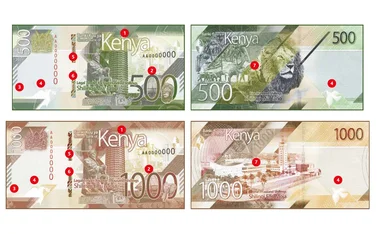
Kenia advierte contra los “ramos de flores hechos con dinero en efectivo”
Los regalos de estilo floral hechos con billetes pegados entre sí perturban el funcionamiento de los cajeros automáticos y son ilegales, según el banco central

El dólar sigue siendo fundamental para la economía filipina, según el BSP
El banco central debate sus respuestas a las fluctuaciones monetarias y las repercusiones del escándalo político

Bulgaria se convierte en el vigésimo primer miembro de la zona euro
Unirse al bloque monetario es una “señal de pertenencia”, afirma el gobernador Radev, mientras sus homólogos le dan la bienvenida

Nigeria busca desalentar el uso de efectivo y simplificar los depósitos
El banco central afirma que el paquete de reformas busca reducir el uso de efectivo y combatir el lavado de dinero

Los fondos de cobertura reducen sus apuestas sobre el BoJ tras un año turbulento en las tasas del yen
Tras el shock electoral de octubre y más de US$300 millones en pérdidas, los dealers reducen su exposición

El efectivo es el medio de pago de última instancia – panel
Los funcionarios presentes en las Reuniones de Otoño de Central Banking analizan los riesgos de interrupciones prolongadas en la era de los pagos digitales