

BoE appraises forward guidance as economy picks up
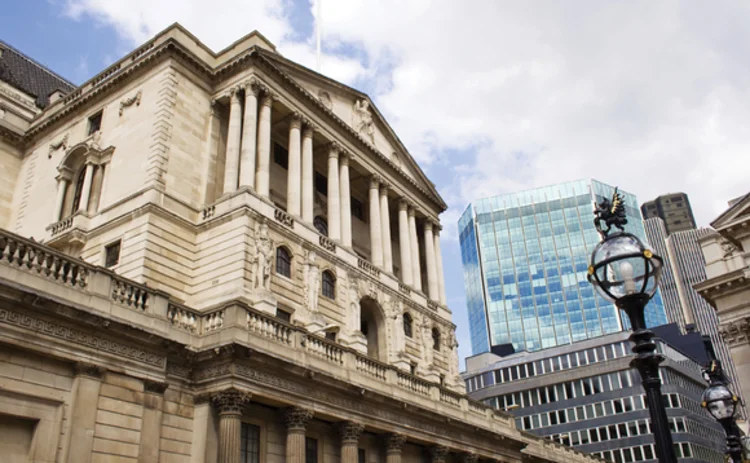

The Bank of England's Monetary Policy Committee (MPC) is upbeat about the prospects for the UK economic recovery and believes its forward guidance is starting to hit home, according to the minutes from its September meeting.
The minutes show unanimity among the nine members over keeping the bank's key interest rate at 0.5% and the stock of its asset purchases at £375 billion, and that none of the knockouts for its forward guidance had been breached.
The committee is optimistic that economists and market participants have displayed an "increased understanding" of the bank's intention to link monetary policy with unemployment. Nonetheless, it acknowledges the need to improve the public's understanding of how the 7% unemployment threshold would work in practice.
The minutes show the MPC making the point emphatically that its 7% threshold for the unemployment rate is "not a ‘trigger' that is mechanically linked to subsequent movements in bank rate".
Many of the committee members have appeared at public events since the introduction of the guidance, including a high-profile hearing with the UK parliament's Treasury Select Committee in which Carney rebuffed accusations that markets doubt the Bank of England's commitment to its new policy set-up.
One member, David Miles, attempted to defend the rationale behind the bank's forward guidance at the Money Macro and Finance Conference hosted at Queen Mary University of London last week.
He explained the bank is attempting to reveal more information about its "reaction function" in the hope of dampening expectations that the MPC will hike rates as soon as the UK recovery gathered pace.
He insisted "the essence of forward guidance is relatively straightforward" and branded some of the media interpretations of the bank's forward guidance as "bizarre". A number of media outlets have misrepresented the guidance as a pledge to keep rates low until 2016.
The danger of this, as pointed out by a member of the audience, is that less economically literate members of the population could enter into long-term contracts, potentially in the housing market, as a result of this mistaken belief.
Miles continued to repeat a line about the Bank of England reaction function and insisted the concept is simple enough for the public to understand. He argued that it is "premature" to evaluate the impact of the guidance after such a short period of time.
In the audience, Shelton Nicholls, a former deputy governor at the Central Bank of Trinidad and Tobago, raised his own concerns over central bank communication.
He suggested the real difficulty facing central banks is not convincing the public of a particular policy path, but convincing them that monetary policy can have any significant impact on the economy to begin with.
"In many ways the public perception is that monetary policy cannot in fact play that role," Nicholls said. "Nothing you say to the public sometimes can convince them that targeting inflation – lowering inflation – will do anything for growth or unemployment."
The minutes also reveal the committee discussed the recent growth in the UK housing market, with its members suggesting the recent pick-up in activity could boost growth and that "some" rise in prices "might provide a modest fillip" to consumer spending and investment.
"Nevertheless, the committee noted that property market developments would become more of a concern if a period of rapid real house price increases appeared in prospect," the minutes say.
The committee highlighted that the Bank of England's Financial Policy Committee (FPC) and Prudential Regulatory Authority (PRA) both had "a range of instruments" they could employ in such a scenario. The FPC met earlier today and will release a statement summarising its discussions and any policy changes on September 25.
Solo los usuarios que tengan una suscripción de pago o formen parte de una suscripción corporativa pueden imprimir o copiar contenido.
Para acceder a estas opciones, junto con todas las demás ventajas de la suscripción, póngase en contacto con info@centralbanking.com o consulte nuestras opciones de suscripción aquí: subscriptions.centralbanking.com/subscribe
Actualmente no puede imprimir este contenido. Póngase en contacto con info@centralbanking.com para obtener más información.
Actualmente no puede copiar este contenido. Póngase en contacto con info@centralbanking.com para obtener más información.
Copyright Infopro Digital Limited. Todos los derechos reservados.
Tal y como se indica en nuestros términos y condiciones, https://www.infopro-digital.com/terms-and-conditions/subscriptions/ (punto 2.4), la impresión está limitada a una sola copia.
Si desea adquirir derechos adicionales, envíe un correo electrónico a info@centralbanking.com prueba prueba prueba
Copyright Infopro Digital Limited. Todos los derechos reservados.
Puede compartir este contenido utilizando nuestras herramientas para artículos. Tal y como se indica en nuestros términos y condiciones, https://www.infopro-digital.com/terms-and-conditions/subscriptions/ (cláusula 2.4), un usuario autorizado solo puede hacer una copia de los materiales para su uso personal. También debe cumplir con las restricciones de la cláusula 2.5.
Si desea adquirir derechos adicionales, envíe un correo electrónico a info@centralbanking.com prueba prueba prueba
Más información en Política monetaria

Un conflicto prolongado con Irán plantea riesgos para la estabilidad, advierten Barr y Woods
El gobernador de la Fed y la PRA del Reino Unido también vuelven a defender la independencia de los bancos centrales

El Sarb sigue “muy comprometido” con el objetivo del 3%, pese al shock actual
El conflicto con Irán está provocando un aumento de los precios, pero la situación “podría ser peor”, afirma el gobernador

El dilema del balance de seis billones de dólares de la Fed
Es poco probable que la iniciativa de Kevin Warsh de reducir el balance del banco central estadounidense resulte una tarea sencilla

Podcast: Los posibles riesgos de la Ley Genius
Cómo el hecho de centrarse en los emisores y los activos de reserva pasa por alto el ecosistema en su conjunto
El BoE mantiene las tasas de interés en el 3,75%
El banco analiza escenarios que contemplan distintos grados de inflación provocada por el conflicto en el Reino Unido

Brasil recorta las tasas en medio de un aumento de las expectativas de inflación
El Copom afirma que tanto la inflación como las expectativas están superando su objetivo del 3%
El FOMC mantiene sus tasas, mientras que Powell decide seguir en el cargo
El presidente saliente seguirá en el cargo de gobernador, alegando la incertidumbre sobre posibles nuevas investigaciones penales

Chile mantiene su política monetaria, señalando mayores riesgos derivados de la guerra en Irán
El BCCh afirma que la trayectoria de las tasas de interés se evaluará reunión por reunión, dada la incertidumbre “mayor de lo habitual”