


Quiet man: is Michael Barr the Clark Kent of regulation?
A decade after crafting Dodd-Frank, Fed’s new vice-chair must tame DC's warring regulatory factions
Need to know
- Michael Barr wasn’t first choice for the Fed’s long-vacant role of vice-chair for supervision, but he may be what the US regulatory system needs.
- He joins a “raucous” regulatory community led by strong characters pulling in opposing directions while interagency work remains incomplete.
- He will tackle a backlog of rules, not least the delayed proposal for a Basel III endgame.
- Risk.net sources expect Barr to co-ordinate crucial emerging interagency work on Treasury market reform, digital assets and climate risk regulation.
- Some hope he will smooth relations between his former colleagues Treasury secretary Janet Yellen and SEC chair Gary Gensler.
- At the Fed, Barr is expected to review his predecessor’s changes to supervision, reprioritise risk assessment and debate US gold-plating of capital standards.
Michael Barr has a knack for getting things done.
The US Federal Reserve’s new vice-chair for supervision may be the quiet man of Washington, but his ability to deliver effective regulation that works for both sides of the political aisle could be his superpower.
He wasn’t the first choice for the role and some might perceive him as a tweedy professor – he spent much of the last decade in academia, most recently as dean of the University of Michigan. But Barr has stayed close to the action in Washington since his stints at the Treasury department in both the Clinton and Obama administrations, where other political appointees included current Treasury secretary Janet Yellen and Securities and Exchange Commission (SEC) chair Gary Gensler.
“He’s very, very much engaged,” says a senior official at a US prudential regulator, who is a former Treasury colleague of Barr’s. “He has continued to come to Washington, [and] I worked with him for four years while I was in government and he was at Michigan. It was all policy-oriented.”

Barr’s pedigree as a key architect of Dodd-Frank reform and continuing ties to Washington, DC, and its major players could make him the right person to bring order to the disharmony in the US regulatory system. His old acquaintance with these fellow regulators might help to heal wounds from recent conflicts in the Biden administration – not least, the divide between Gensler and Yellen.
Fed vice-chair Lael Brainard and Treasury counsel Laurie Schaffer have also worked with Barr in the past.
But Barr is not just a conciliator who brings people together. His role in getting the Volcker rule across the line is the stuff of legend. And bank lobby groups are said to be more fearful of Barr than of Biden’s first choice for the job, Sarah Bloom Raskin, whose nomination was torpedoed by Senate Republicans and centrist Democratic Senator Joe Manchin.
He is respected across different constituencies in Washington, where his reputation for being knowledgeable, capable and detail-orientated precedes him.
“Barr is in a very good place in terms of being able to assess the players, [and] assess the interests of the parties that are involved [in] understanding where the minority is in Congress,” says Donald Lamson, a consultant who drafted aspects of the Dodd-Frank Wall Street Reform and Consumer Protection Act under Barr at the Treasury.
Remarkably, in today’s political climate, this opinion is shared by Republicans and Democrats. He gained a solid 66 Senate votes in favour of his nomination, with just 28 Republicans voting against his appointment.
He’s very, very much engaged
Senior official at a US prudential regulator
“Republicans may not agree with all of his policy choices, but they do view him as someone who is thoughtful, and so that was why he garnered a number of Republican votes,” says Michael Piwowar, director of the Milken Institute Center for Financial Markets, and a former Republican SEC Commissioner.
Barr joins the Federal Reserve Board at a crucial moment for bank supervision. The vice-chair role has been unfilled for almost three quarters, delaying major rulemaking for the Basel III endgame and guidelines on the prudential treatment of digital assets and climate risks.
His strong record on consumer protection and bank capital, and the critical role he played in designing the Dodd-Frank Act, not least the creation of the Consumer Financial Protection Bureau (CFPB), mark him out as a doer as well as a thinker.
The prudential regulator suggests bank lobbyists may have fair reason to fear Barr, as he will be “extremely effective and extremely aggressive” once he has chosen a path: “He knows how Washington works and how to achieve things.”
The Fed declined to comment for this article.
Back story
Barr first joined the US government a few years out of Yale Law School, settling in the Treasury department in 1995 as a special assistant under then secretary Robert Rubin. In 1997, he was promoted to deputy assistant secretary for community development policy – the same year that Gensler joined the Treasury, fresh from Goldman Sachs, as assistant secretary for financial markets. Yellen also joined the administration that year, resigning her seat on the Federal Reserve Board after just three years, to chair Clinton’s Council of Economic Advisers.
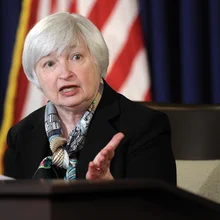
In 2001, during the George W Bush presidency, Barr joined the University of Michigan as a professor of law. Eight years later, he, Gensler and Yellen were reunited in Obama’s administration. Gensler was tapped to chair the Commodity Futures Trading Commission in 2009, and a year later, Yellen was appointed vice-chair of the Fed, becoming chair in 2013.
Barr rejoined the Treasury as assistant secretary for financial institutions, where he would co-ordinate the drafting and passage of the Dodd-Frank Act with Congress, which included the creation of a new independent agency in the form of the CFPB, a Treasury Department research unit called the Office of Financial Research, and a new interagency body in the Financial Stability Oversight Council.
Progressive Democrats, however, still regard Barr with suspicion, and mothballed his nomination for the top job at the Office of the Comptroller of the Currency, last year, for perceived timidity in standing up to banks after the 2008 financial crisis, and closeness to then Treasury secretary Timothy Geithner. Before being appointed SEC chief, Gensler was picked by the White House to lead the committee that proposed personnel for all the top regulatory roles, under which Barr’s name came up for the OCC.
In her memoir, former Federal Deposit Insurance Corporation (FDIC) chair Sheila Bair describes Barr as defending the financial industry by seeking to eliminate strong derivatives regulations, weaken the Volcker rule, and preserve the ability for future bailouts.
But Piwowar calls progressives’ complaints “comical”. If Barr had gone any further left, he would have lost the moderates, and if he had gone any further right, he would have lost the progressives, he says: “Given the political realities of the time, [Barr] went as far left as he could.”
Consensus builder
Sources agree that the skill and political acumen Barr demonstrated co-ordinating Dodd-Frank should serve him in today’s fractured – and fractious – Capitol Hill, particularly as the Democrats face decisive mid-term elections in November.
Relations between US regulatory agencies and the Treasury are also far from smooth. It’s well known that Gensler is at loggerheads with the Treasury under Yellen, and rumours abound that the White House has wrestled control of economic policy from the Treasury.
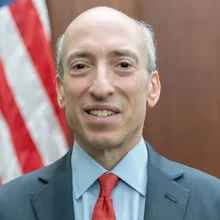
“It is a very raucous community,” says a former senior adviser to a Democrat SEC chair, “There has always been tension [between the SEC and the Treasury], but it’s recently been worse.”
Clashing personalities are in part to blame, but the Democrat adviser also points to a lack of direction from the White House. Biden’s statement on Barr’s confirmation made no reference to financial regulatory policy, for example, but instead cited countering inflation and “sound oversight” as goals for the US economy.
This apparent vacuum contrasts with the Obama administration. “There was orientation around writing Dodd-Frank, passing Dodd-Frank and implementing Dodd-Frank. There was disagreement over specific tactics, but there was agreement broadly,” says the former senior SEC adviser.
Barr’s character and expertise could position him for a mediating role, and the adviser thinks Barr will seek to build consensus: “A lot of the job will be wrangling cats.”
This could be important, since several items in Barr’s in tray, such as climate risk, digital asset regulation, Treasury market reform and, crucially, the Basel III endgame, will require interagency collaboration.
“It wouldn’t surprise me at all if Barr winds up being a force for good in terms of getting increasing co-operation,” says the senior bank regulator.
There are certainly plenty of areas for Barr to exercise this power to be a force for good.
Michael could pull a Gary Gensler on the crypto crowd, [becoming] the industry’s new worst friend
Former senior Senate staffer
The SEC has put forward proposals for Treasury market reform that are unpopular and, according to some, unworkable. The Treasury, meanwhile, is said to be unconvinced by the SEC proposals, and has launched its own initiative. But the Fed has been quiet on the subject, in large part because it has been lacking a vice-chair for supervision.
The SEC has also presented ambitious climate disclosure rules that are turning into a political headache for the Biden administration.
And virtually all of the many US regulatory bodies are fighting over who regulates crypto.
In his nomination hearing, Barr advocated for “clear rules” to govern financial innovation, which some crypto pundits link to his time as an adviser to blockchain company Ripple and read as signalling a friendly approach.
But sources, such as a former senior staffer on the Senate Committee on Agriculture, Nutrition and Forestry, who worked with Barr on Dodd-Frank, believe that Barr – like vice-chair Brainard, Michael Hsu at the OCC and Martin Greenberg at the FDIC – will be “especially cautious”.
“Michael [Barr] could pull a Gary Gensler on the crypto crowd, [becoming] the industry’s new worst friend,” says the former staffer.
Sea change on capital
Unsurprisingly, bank capital is expected to be Barr’s first priority. At his nomination hearing, he stated repeatedly that he would “holistically” review bank regulatory capital and liquidity standards, as well as the tailoring of standards by firm size.
“Clearly, capital is on the table,” says Phillip Basil, director of banking policy for public interest group Better Markets, who formerly worked for JP Morgan and the Fed.
But Barr’s tenure will likely also mark a philosophical shift from a fixation on capital levels to a renewed focus on appropriate risk assessment, Basil predicts.
This could mean “accounting for the right risks, and … whether there are enough backstops in place that ensure we account for uncertainty in the capital regime”, says Basil: “And if that leads to higher capital requirements, then so be it.”

Barr’s predecessor, Randal Quarles, focused on making Dodd-Frank provisions, in Piwowar’s words, “workable for banks”. Barr, by contrast, is unlikely to shy away from more stringent capital requirements, particularly for the largest and global systemically important banks (G-Sibs).
Indeed, bank lobby groups are preparing for a rough ride, reports the senior bank regulator: “They … think they probably would have done better with Sarah Bloom Raskin, rather than Michael Barr, because while she may be further to the left than he is, he will be far more active [on capital] than she would have been.”
Basil believes Barr will initially focus his energy on modifications to current regulations that have the most impact. These would include Basel III endgame implementation and reviewing the G-Sib surcharge and stress-test assumptions.
Of these, the most urgent item – a delayed Basel III endgame proposal expected in early 2023 – may see Barr approving what he sees as non-negotiable aspects that increase capital requirements, but implementing only “to a certain point”, Basil predicts.
Political considerations will likely prevent Barr from allowing banks’ capital requirements to jump by 30%, as some calculations suggest they could.
Instead, he may be open to reviewing gold-plating of the US capital regime to offset capital increases. This could include the G-Sib surcharge to ensure its calibration is still appropriate, given the changes to the banking sector since it was first set.
This approach would mark a shift from the commitment to hard capital rules that characterised Democratic policy when Dodd-Frank was crafted, and lawmakers introduced the Collins Amendment, which enshrined in law a 100% capital floor for big banks.
Rollback review
One vital question is how Barr will approach regulation under the Dodd-Frank Act. Jeremy Kress, an assistant professor of business law at Michigan Ross, co-faculty director of the University of Michigan’s Center on Finance, Law & Policy, and a former Federal Reserve Board lawyer, notes that many Dodd-Frank items remain incomplete.
Additionally, his predecessor Quarles oversaw changes to the Volcker rule, capital and liquidity requirements, stress-testing assumptions and the frequency of stress tests for foreign banks and large banks, that Democrats, like Fed vice-chair Brainard, saw as dangerously deregulatory.
Some of these were achieved through ‘tailoring’, and others via the introduction of the stress capital buffer regime, which made bank capital planning part of the stress-testing process.
It wouldn’t surprise me at all if Barr winds up being a force for good in terms of getting increasing co-operation
Senior official at a US prudential regulator
Barr opposed tailoring in a 2018 article, but it is debatable how far he will go in reversing policy set by Quarles. Almost all sources believe a reset to regulation circa 2016 is unlikely. Instead, Barr is expected to review the changes and make revisions to what he has inherited.
“He will try to figure out if there are certain things that Quarles did that need to be reversed. I don’t think he’s going to set out to just reverse everything,” says the former Senate staffer. “Maybe he’ll fine-tune them. It‘s a question of what’s important.”
Consultant Lamson agrees: “He’s going to take a very close look at Dodd-Frank [and] what’s happened in terms of its implementation. He’s probably going to look at where it’s gone right, [where] it’s gone wrong, and then see what he can do from a regulatory standpoint to advance the policy goals.”
The senior bank regulator thinks Barr’s centrist instincts mean he recognises the importance of financial institutions: “He’s not like a Rohit Chopra [the current CFPB head], who comes in and is just seemingly trying to blow things up.”
But Lamson, who reported to Barr at the Treasury and wrote the first draft of the Volcker rule, expects his former boss to defend parts of his creation against changes made in 2020. “He’s not going to back down [on Volcker], because he believes [in it] strongly,” he says.
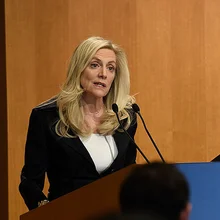
The 2020 changes permitted banks to invest in venture capital funds and credit funds, and they were opposed by vice-chair Brainard. The permission of such activities, she argued, was not part of congressional intent. Congress chose not to make such proposed changes when it amended Volcker in 2018, she noted.
Kress isn’t convinced that Barr would want to reopen this debate. “I don’t know if the agencies will have an appetite to revisit Volcker, just because it’s so controversial and messy,” he says, adding that there are other areas for progressive regulators to tackle.
If Barr were to reopen and strengthen the stress-test regime through rulemaking, he could restore the assumption that balance sheets will grow under stress, as well as Fed supervisors’ “qualitative objection”. This last tool enabled supervisors to have some say over banks’ capital plans.
Basil thinks the objection could return in a softer form. For example, if a bank is found to have significant deficiencies, the Fed could announce that it would be subject to the qualitative objection the following year.
“This would have the effect of providing a significant incentive for the bank to clean up its issues as much as possible over the following year,” says Basil.
And if that bank continues to fall short of supervisory expectations, then the Fed would be more justified in objecting to payouts in its capital plan. This, Basil believes, would be a more elegant alternative to reinstating a version of the old regime.
Barr is expected to continue allowing community banks to face a lighter regulatory burden than larger banks, particularly the G-Sibs, which could still face tougher standards. But don’t expect him to call it ‘tailoring’, which Democrats see as synonymous with deregulation.
Kress, Barr’s former colleague at Michigan, notes that in his nomination hearing, Barr “used the phrase ‘a graduated approach’ and ‘a tiered approach’ to regulation … That was intentional”.
Under this tiered approach, liquidity standards for large regional banks may come under scrutiny. Barr is expected to assess whether the thresholds for reduced liquidity coverage ratios have adequate justification. He may also support resolution requirements for Category III banks, as acting comptroller Hsu has proposed.
This could be one of the many areas where Barr’s command of detail and ability to foster compromise could deliver results.
Barr may not have been the Fed’s first choice of supervisor, but he might turn out to be the political Superman it needs.
This story originally appeared in Central Banking’s sister publication, Risk.net
Editing by Louise Marshall
Solo los usuarios que tengan una suscripción de pago o formen parte de una suscripción corporativa pueden imprimir o copiar contenido.
Para acceder a estas opciones, junto con todas las demás ventajas de la suscripción, póngase en contacto con info@centralbanking.com o consulte nuestras opciones de suscripción aquí: subscriptions.centralbanking.com/subscribe
Actualmente no puede imprimir este contenido. Póngase en contacto con info@centralbanking.com para obtener más información.
Actualmente no puede copiar este contenido. Póngase en contacto con info@centralbanking.com para obtener más información.
Copyright Infopro Digital Limited. Todos los derechos reservados.
Tal y como se indica en nuestros términos y condiciones, https://www.infopro-digital.com/terms-and-conditions/subscriptions/ (punto 2.4), la impresión está limitada a una sola copia.
Si desea adquirir derechos adicionales, envíe un correo electrónico a info@centralbanking.com prueba prueba prueba
Copyright Infopro Digital Limited. Todos los derechos reservados.
Puede compartir este contenido utilizando nuestras herramientas para artículos. Tal y como se indica en nuestros términos y condiciones, https://www.infopro-digital.com/terms-and-conditions/subscriptions/ (cláusula 2.4), un usuario autorizado solo puede hacer una copia de los materiales para su uso personal. También debe cumplir con las restricciones de la cláusula 2.5.
Si desea adquirir derechos adicionales, envíe un correo electrónico a info@centralbanking.com prueba prueba prueba
Más información en Regulación
La FCA del Reino Unido se someterá a una investigación interna tras el suicidio de un denunciante
El organismo regulador nombra a un exfuncionario del BoE para que examine los procedimientos, ante las críticas de antiguos empleados

Las reformas permanentes del FRTB se consideran fundamentales para la adopción del IMA
Las medidas de alivio temporales concedidas en junio han contribuido muy poco a fomentar el uso de modelos internos en Europa

Los bancos centrales de la UE quieren más bonos soberanos en las reservas de las stablecoins
Las propuestas de revisión de Micar incluyen romper la interdependencia en materia de criptomonedas con los bancos rivales

Los reguladores están mejor preparados para afrontar otro Credit Suisse, afirma el presidente de la SRB
El FSB refuerza las directrices sobre cooperación internacional, pero la UE necesita un mayor apoyo mutuo

La Ley Clarity de EE. UU. vuelve a fracasar en el Senado
Los demócratas convencen a los republicanos para que se opongan al proyecto de ley sobre criptomonedas respaldado por Trump

De pilar en pilar… y de un lado para otro: ¿cuál es el futuro del riesgo operativo en Europa?
Los expertos consideran que un cargo mejorado del Pilar 2, basado en los datos de Dora, resultaría más útil que un enfoque genérico del Pilar 1

La PRA tiene dificultades para seguir los pasos de la Fed en materia de modelización del FRTB
Los expertos en riesgo de mercado afirman que las pequeñas diferencias en la normativa estadounidense suponen un mayor incentivo para la adopción del IMA

La prueba de resistencia geopolítico del BCE necesita poner precio a los riesgos
Solo un mercado puede determinar cuánto debería costar asegurarse contra las pérdidas derivadas de un evento de riesgo geopolítico, pero ese mercado no existe, sostiene un académico