
The Americas
Staff strength and salary associated with size of reserves
Managers report greater satisfaction with non-staff resources than staffing levels


Economists devote up to half of working hours to research
Higher-paid research economists tend to spend more time on own research
Central banks predict growth more accurately than inflation
AI models may offer more precise forecasts
Most key projection models capture policy rates
But respondents rarely disclose policy rate forecasts alongside scenarios
Third of key models now employ endogenous financial sector
Multiple channels of monetary transmission rooted in majority models
Central banks complement traditional models with AI
Time series and semi-structural models remain economists’ choices for forecasting

Working group minutes: macro-pru calibration challenges
Many central banks are struggling to get enough data, particularly on borrowers
Working paper production linked to number of PhD economists
Central banks averaged output of roughly 10 working papers last year
Third of economics departments say staffing ‘barely sufficient’
Forecasting, policy analysis and research are economists’ top duties
Economists’ average annual salary rises
Incomes have some relation with GDP per capita and central bank size
Economics staff strength increases over two-year period
Departmental size as share of central banks’ workforce widens to 7.7%, on average
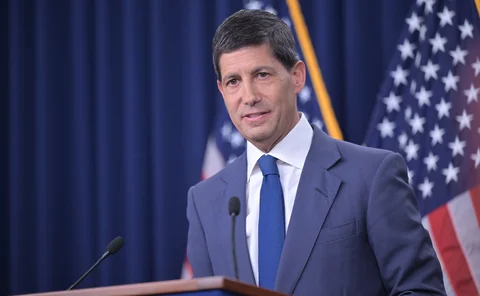
Federal Reserve holds rates with three members dissenting
Hammack, Kashkari and Logan push for 25bp rise in what FOMC chair says was a collegial ‘family fight’

MBS convexity hedging: back with a vengeance, or ghost story?
More bonds now sit with active hedgers but market is split on whether flows can move US rates again

Have regulators gone soft on enforcement? (And should we care?)
US agencies are scaling back punishments for technical rule breaches, raising concerns that small but crucial risks may be ignored

How US regulators could stop management driving Camels
Supporters flag disconnect from other indicators; critics fear early warnings will go unnoticed

US regulators throw banks a curveball on committed credit lines
New Basel III charge on undrawn facilities will hit largest banks in areas like fund finance and credit cards

Fed will ‘follow the law’ and ‘the data’ – Warsh
Chair tells Congress his aim is to keep US central bank out of politics

Cross-border co-operation stronger for non-central bank supervisors
Roughly one-fifth of central banks lack supervisory college membership

Bowman shuns CECL. Friends say it just needs a little help
How far should FASB go in reforming credit-loss accounting rules?
Supervisors report capital and liquidity resilience across banks
Basel II remains most adopted global standard among respondents

NY Fed study points to more tariff-related inflation in US
Survey shows many firms plan to pass on further costs to customers over coming months