

Renminbi could be adopted into SDR by 2015, says CentralBanking.com panellist
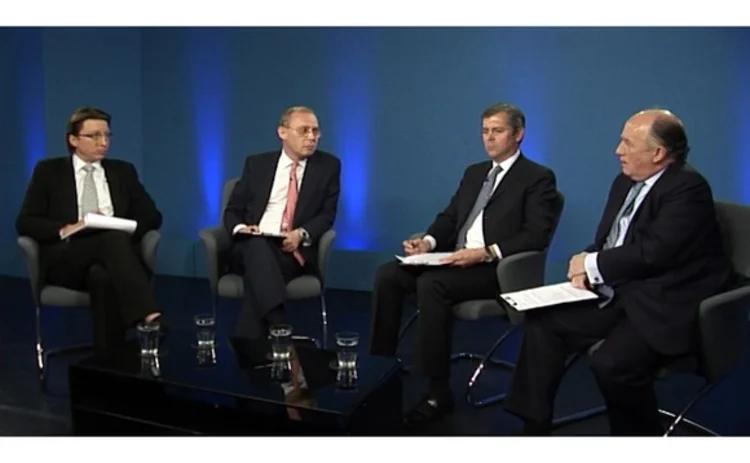
The renminbi could be adopted into the special drawing rights (SDR) of the International Monetary Fund (IMF) by 2015 if current trends in reserves management continue, according to Gary Smith, global head of official institutions at BNP Paribas.
"The renminbi would not qualify using existing criteria, but the IMF is looking at the criteria, and the renminbi might be included in the next weighting in 2015 if not before, if current trends continue," said Smith, who was speaking as a panellist on a Central Banking On Air debate Should reserve managers invest more in emerging markets? broadcast today.
His view was partly endorsed by fellow panellists Ulrik Walther, head of sovereign institutions at Pyramis Global Advisors. "It's inevitable that the renminbi will be included in the SDR," said Walther, but he did not provide a timeline for its inclusion.
While there was broad agreement among the panellists that reserve mangers would continue to diversify into emerging market currencies, including the renminbi, there were divergent views on the scale and extent of this diversification.
David Smart, global head of sovereign funds at Franklin Templeton Investments, said that 5% would serve as the minimum holdings in emerging market currencies, but that if current trends continue this was likely to increase. "Central banks are sitting on money that is far in excess of their requirements," said Smart. "This means that the liquidity aspect of reserve management, which is the big advantage of the US bonds, is less important. We have seen reserve managers create [separate] investment pools, which is part of the shift towards return."
the renminbi might be included in the next weighting in 2015 if not before, if current trends continue
But Walther advocated matching reserve allocations broadly to trade ties. He warned reserve managers, which are struggling to generate returns from low-yielding US Treasuries, not to switch to emerging market assets purely in a bid for yield. He said it would be a cause of concern "if reserve managers allocate to emerging markets purely from a return perspective, rather than from a trade perspective".
But Smith also pointed out that the perceptions about the relative riskiness between traditional reserve currencies and emerging market currencies is converging. "At the same time as the traditional markets, such as the US and some European government markets, have become less attractive, emerging markets have become more attractive," he said.
Only users who have a paid subscription or are part of a corporate subscription are able to print or copy content.
To access these options, along with all other subscription benefits, please contact info@centralbanking.com or view our subscription options here: www.centralbanking.com/subscriptions
You are currently unable to print this content. Please contact info@centralbanking.com to find out more.
You are currently unable to copy this content. Please contact info@centralbanking.com to find out more.
Copyright Infopro Digital Limited. All rights reserved.
As outlined in our terms and conditions, https://www.infopro-digital.com/terms-and-conditions/subscriptions/ (point 2.4), printing is limited to a single copy.
If you would like to purchase additional rights please email info@centralbanking.com
Copyright Infopro Digital Limited. All rights reserved.
You may share this content using our article tools. As outlined in our terms and conditions, https://www.infopro-digital.com/terms-and-conditions/subscriptions/ (clause 2.4), an Authorised User may only make one copy of the materials for their own personal use. You must also comply with the restrictions in clause 2.5.
If you would like to purchase additional rights please email info@centralbanking.com
More on Reserves

Hong Kong taps reserves to fund infrastructure spending
Government to draw from HKMA’s investment income for first time in more than 40 years

Reserve managers focus on the ‘E’ in ‘ESG’
Central banks continue buying green assets while largely eschewing governance and social elements

China goes long gold, short Treasuries
Bullion-buying spree continues, but banks told to limit purchases of US government debt

Dollar will remain core to global finance – Saudi governor
US currency maintains strong liquidity and robust legal framework despite “hiccups”, says Sayari

Ken Rogoff on the dollar’s role in a fractured world
The former IMF chief economist speaks about Trump, central bank independence and the $20 trillion underground economy

Kazakh crypto fund to hold assets seized from criminals – report
Central bank to use hedge funds to hold confiscated digital assets on its behalf

BoJ rejects opposition’s call for faster ETF selloff
Bank says matter ‘fully addressed’ last year, after lawmaker proposes speedier sale to fund tax cut

IMF overcalculated Taiwan’s USD exposure – central bank chief
Fund’s measure showing USD holdings at 45 times local FX markets is “misunderstanding”, Yang says