
Opinion/Governance
Is independence compatible with climate action?
Lessons from China indicate relationship between governments and central banks may need to change, argues Mathias Larsen


Central banks must rethink their accounting treatment of money
Biagio Bossone and Massimo Costa call for money to be accounted for as equity for the issuer and as a public asset for the economy

Rewriting the monetary balance sheet
Biagio Bossone and Massimo Costa write that a new accounting approach is needed for central banks and commercial money in the digital age

Fed independence is under threat
US central bank faces increasing pressure although monetary policy autonomy looks safe for now

AI at the ECB and the need to strengthen internal critical thinking
Carlos Bowles writes that efficiency gains should be shared with staff and efforts made to protect cognitive capacity

US dollar dominance: beyond the ‘exorbitant privilege’
Biagio Bossone argues that dollar ‘seigniorage’ extends into the very structure of global finance and its ‘exorbitant privilege’ is worth up to $804 billion annually

The monetary base and seigniorage in a digital era
Rapid technological innovation in payment systems portends declining demand for money. Emerging markets and low-income countries may have to lower their expectations of seigniorage revenue

Combining central banking orthodoxy with innovation
Sergiy Nikolaychuk argues the future of central banking centres on adaptability as well as independence

All eyes on the Fed
The US central bank faces a challenging path to fulfil its mandated goals

Governance and diversity at the Federal Reserve
Could changes in governance practices have contributed to poor performance in 2021–22? asks Jeffrey Lacker

Focus is needed on improving central bank forecasts
Charles Goodhart believes tougher action over forecasting errors is preferable to policy-maker performance-related pay

Time to pay policy-makers based on their performance
The remuneration framework for central bankers needs reform amid failures to hit inflation targets, argues David Bholat

The financial sanctions maze
Anyone affected by Russia-related sanctions knows patience and caution are strongly advised, writes Richard Heckinger
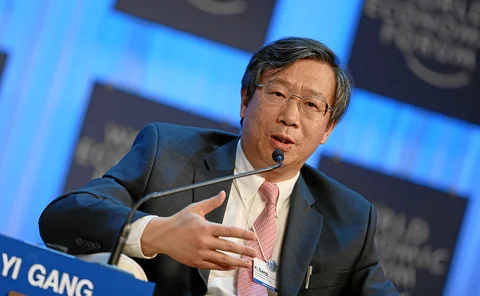
PBoC leadership faces multiple challenges
Yi Gang’s staying on as governor will only ease some of the pressures, writes Hui Feng

It is time to reorganise the Bank of England
Recent crises have shown the BoE’s management structure to be outdated, says William Allen

Reshuffle heralds new era of Chinese central banking
Policy room for the next PBoC governor looks limited, as loyalists win out over technocrats for top economic posts

How we can improve gender diversity in economics
Mary Suiter and Oksana Leukhina say gender diversity in economics must be championed

Three ways to bolster flawed AML/CFT in the EU
The EU needs to significantly improve the structure and resourcing of its AML/CFT oversight if it really wants to combat illicit money flows, write Panicos Demetriades and Radosveta Vassileva

Diversity is key for policy-making and institutional culture
Anita Bezhoska, governor of the National Bank of the Republic of North Macedonia, talks about the benefits of diversity for central bank policy-making, and why more needs to be done to improve the number of women within the financial sector as a whole

Monetary-fiscal policy co-operation and the ‘slippery slope’
Barry Eichengreen assesses the risks central banks face from their closer links to fiscal policy

How will Covid-19 hit central banks’ financial results?
The Covid-19 crisis has affected central bank incomes from seigniorage and other sources. But by how much, ask Zbigniew Polański and Mikołaj Szadkowski